
Three years ago, I joined a PR agency for entirely the wrong reason.
I wanted links.
That was it. No grand strategy. No revelation about brand building. I wanted a team that could build high-authority links so I could improve rankings and win more organic traffic.
Like most marketers operating in the SEO world, I was thinking about efficiency.
Better visibility. More sessions. Higher conversion rates.
In other words, I was thinking too small.
What I actually discovered over the next three years was not the mechanics of links.
I discovered the economics of fame.
The Efficiency Trap
Modern marketing teams are organised around optimisation.
Improve conversion rates. Lower acquisition costs. Refine attribution. Extract incremental gains from performance channels.
None of this is wrong. It is simply incomplete.
Optimisation captures demand that already exists.
It does not change how demand is distributed across competitors. It does not increase the number of buyers who default to you before comparison even begins.
If 100,000 buyers are searching your category this month, performance marketing might move your share from 8 percent to 10 percent.
That matters.
But it does not change the underlying structure of the market.
Fame does.
Why Small Advantages Now Matter More Than Ever
To understand this properly, we need to step outside marketing theory and into economics.
In 1981, economist Sherwin Rosen published The Economics of Superstars. His insight was deceptively simple.
When two conditions exist:
The preferred option can reach a large market.
The cost of serving additional customers is very low.
Small differences in perceived preference create very large differences in economic reward.
This was originally used to explain why top musicians or athletes earn disproportionately more than slightly less talented peers.
But that structure now governs brand competition.
Digital distribution removed friction. One SaaS platform can serve millions. One ecommerce site can scale globally. Marginal cost approaches zero.
When marginal cost approaches zero, preference concentration accelerates.
If buyers slightly prefer Brand A over Brand B, that small preference is expressed repeatedly across a massive audience.
Second place does not earn slightly less.
It earns disproportionately less.
That is Rosen’s mechanism.
AI Is Compressing Cost Even Further
Now layer artificial intelligence on top of that structure.
AI further reduces the marginal cost of serving customers.
Customer support becomes automated. Content production becomes faster. Sales qualification becomes partially autonomous. Operational processes become more efficient.
The companies that adopt AI fastest will reduce their cost to serve more quickly than their competitors. They will operate closer to zero marginal cost across more parts of the value chain.
And this is where it becomes strategically uncomfortable.
When the cost to serve falls, the bottleneck shifts.
It is no longer operational capacity. It is no longer fulfilment. It is no longer even internal efficiency.
It is demand.
If you can serve one customer at near-zero incremental cost, you can serve one million the same way. The constraint is no longer supply. It is preference.
In Rosen’s framework, that intensifies superstar dynamics.
When distribution is infinite, and marginal cost is minimal, even small differences in preferences can lead to massive divergence in economic rewards.
AI is not flattening markets.
It is concentrating them.
The slightly preferred brand captures disproportionate volume. The slightly more famous competitor compounds the advantage. The slightly less recognised brand is forced to discount.
As AI reduces the cost of serving customers, every business must acquire more customers to maximise that efficiency.
And the only scalable way to acquire more customers in that environment is to increase preference before the buying process even begins.
That is fame.
Fame Is a Demand-Side Force
Fame is not ego. It is not awards. It is not vanity metrics.
It is repeated recognition within the relevant buying group.
When buyers face uncertainty, they rely on heuristics. Recognition is one of the strongest heuristics available.
A slightly more familiar brand is:
Perceived as less risky. Easier to justify internally. Assumed to be more validated. Cognitively easier to choose.
Each effect is modest in isolation.
Multiplied across thousands of buying decisions, they create divergence.
Familiarity produces preference. Preference produces concentration. Concentration produces disproportionate reward.
That is not communications theory.
That is revenue structure.
From Links to Networks
My obsession with this started when I repeatedly read Linked by Albert-László Barabási.
Barabási’s work on network science explains how hubs dominate growth in complex systems. Whether you are analysing academic citations, criminal networks, or the web, the same structure appears.
Before marketing, I worked in police intelligence mapping organised crime networks. Remove the right hub, and the system weakens, and organised crime groups fall. Criminals grow through networks. They grow through connections and hubs.
Brands grow through networks, too.
Media publications are hubs. Journalists are connectors. Events are accelerants.
Links are simply visible traces of attention flowing through that network.
Which is when I realised something uncomfortable.
Most brands are barely in the network at all.
The Visibility Illusion
Scroll through LinkedIn, and you will see endless PR wins.
Coverage screenshots. Link celebrations. Campaign applause.
But when you map actual media presence over time, most brands are mentioned far less than they believe.
And when they are mentioned, it is often for the wrong things.
Brands grow through mental availability and physical availability.
Media coverage is a direct lever of mental availability.
But not all coverage builds the right associations.
If a dog food brand wants to dominate canine health, but its media mentions cluster around novelty stunts unrelated to wellbeing, awareness increases but preference does not.
Random exposure creates noise.
Contextual, repeated exposure creates fame.
And fame shifts the demand curve.
Which is why I built our FAME Engine.
The JBH Fame Engine
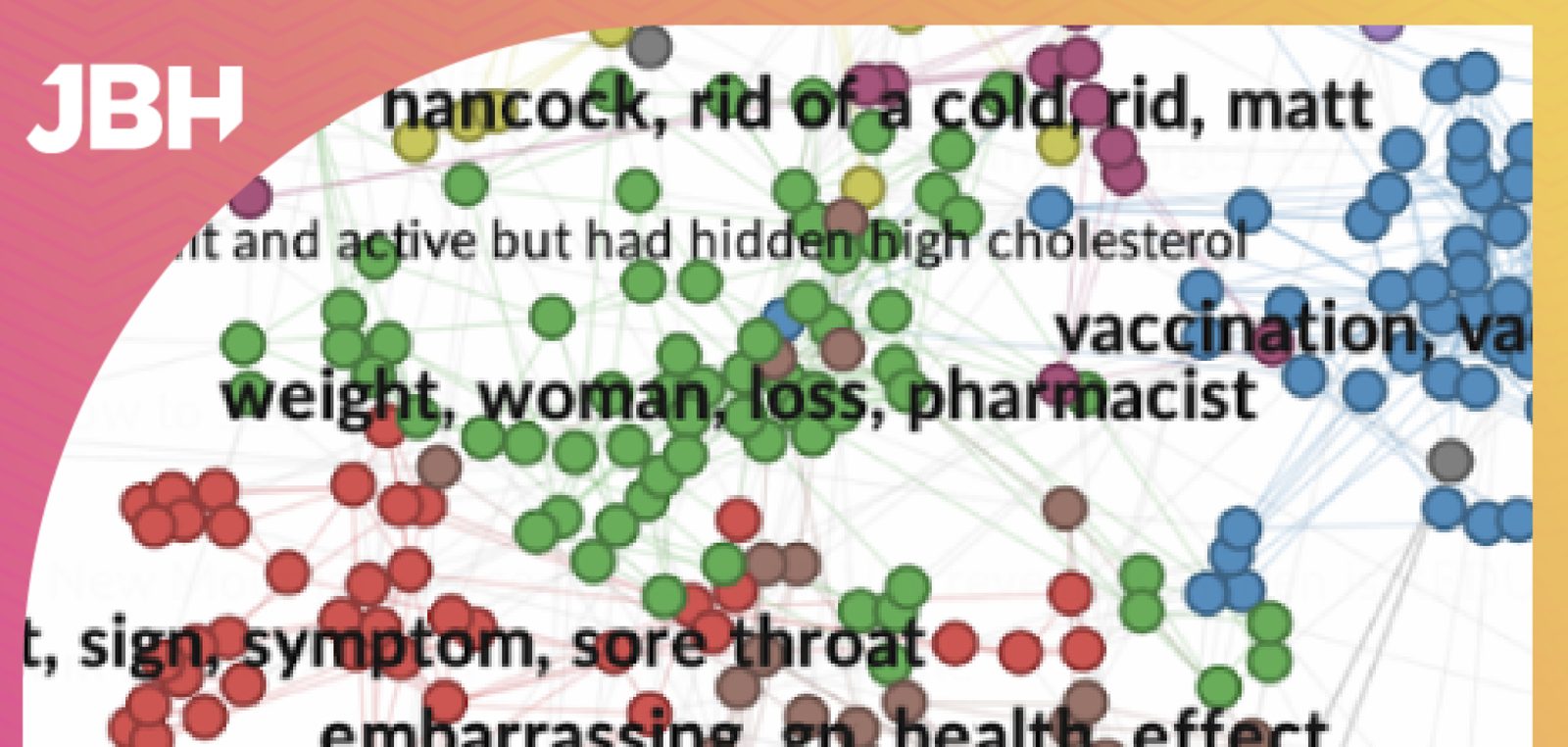
At JBH, we built what we call a Fame Engine to visualise this properly.
It is not a link tracker.
It is a semantic media intelligence system that maps contextual fame across twenty years of coverage.
We analyse:
Every headline. Every co-occurring theme. Every publication tier. Every contextual cluster.
We measure relative prominence inside defined topic spaces.
It shows:
What you are actually famous for. Whether your PR reinforces revenue-driving attributes. Where competitors are building narrative dominance. Whether your visibility is compounding.
Because in superstar-style markets, marginal fame advantage is not optional.
It is strategic leverage.
Events, Hubs and Compounding Fame
When you study fame patterns across individuals and brands, common structures appear.
There is always a hub. There is always an event. There is always amplification.
Product launches. Partnerships. Stunts. Category commentary. These are not just campaigns.
They are event nodes that trigger network propagation.
Without events, fame decays.
With strategically aligned events, fame compounds.
The critical factor is alignment.
Are you being talked about for the attributes that drive revenue?
Or are you simply visible?
Visibility without strategic association does not shift demand.
It merely creates temporary attention.
AI and the Concentration Effect
AI systems do not distribute attention neutrally. They select.
Search engines answer rather than refer. Recommendation systems optimise for historical dominance. Language models summarise widely cited sources.
If your brand appears slightly more often in authoritative, contextually relevant media environments, it becomes statistically safer for systems to surface.
If surfaced more often, it becomes more familiar.
If more familiar, it is chosen more often.
Machine reinforcement and human preference begin to compound each other.
Broad prompts, such as best CRM or top PR agency, reward the slightly famous.
Only expert users craft narrow prompts that surface niche alternatives.
Most buyers do not.
In this environment, being slightly more famous in the right context creates a disproportionate return.
Being slightly behind compounds in the opposite direction.
Optimisation Moves You Along the Curve. Fame Shifts It.
Performance marketing improves efficiency within existing demand.
Fame increases default demand.
Optimisation moves you along a demand curve.
Fame shifts the curve outward.
And in scalable markets governed by superstar economics, outward shifts create significantly larger long-term gains than incremental efficiency improvements.
Fame also influences pricing power.
A slightly more famous brand faces lower resistance to premium pricing. It feels safer. Easier to justify internally. Less risky for decision-makers.
That creates a fame-based risk premium.
The less famous competitor compensates with discounts.
The more famous competitor compounds margin.
That is structural economics.
But how does this all look in reality?
Reading a FameMap: Tyson Fury as a Case Study
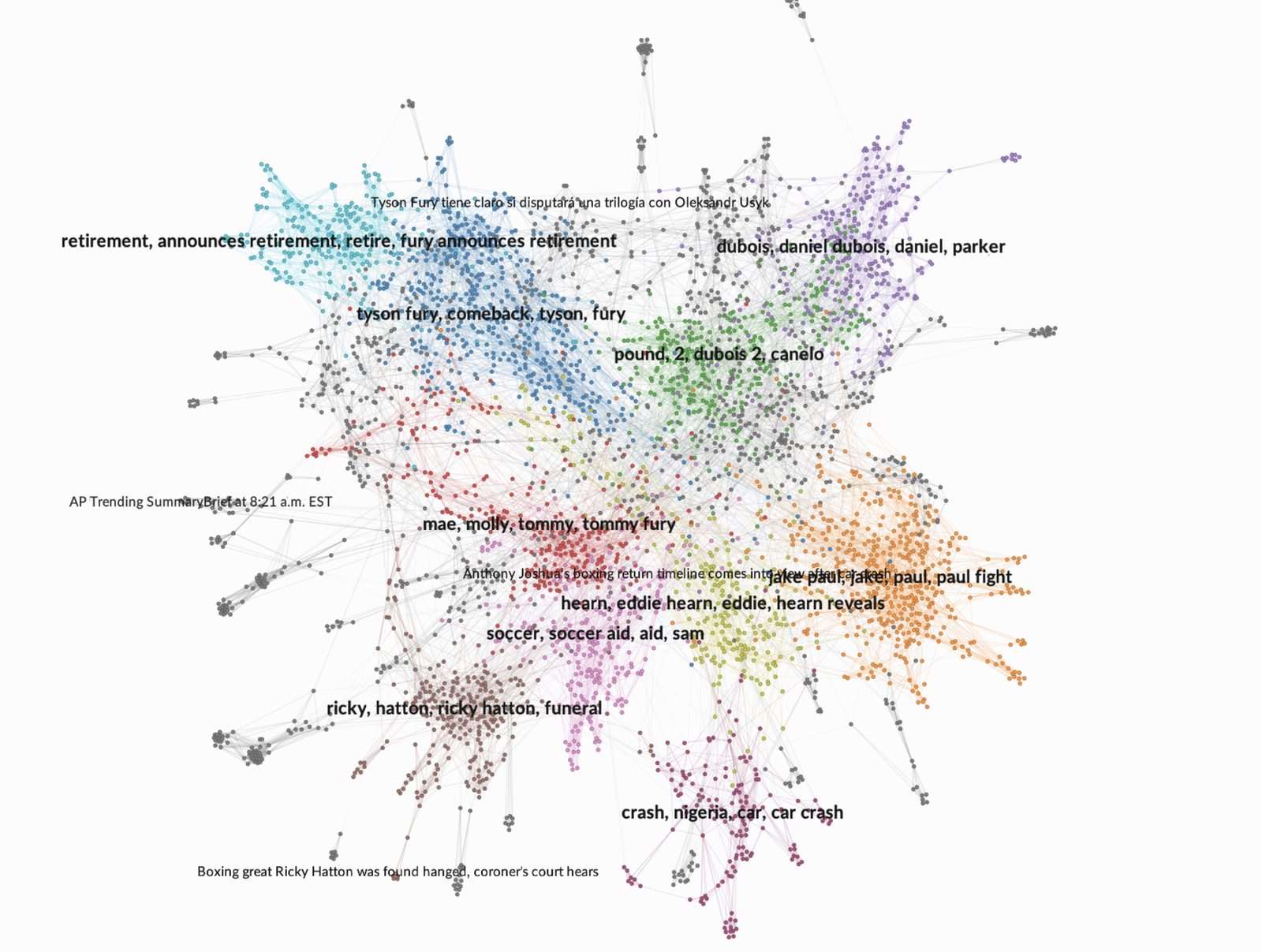
To make this practical, consider a real FameMap.
When we mapped Tyson Fury’s media presence over the last year, distinct clusters immediately appeared.
One dominant cluster centred on retirement announcements and comeback declarations.
Another cluster connected him to his brother, Tommy Fury, and through that to Molly-Mae.
Additional clusters formed around specific opponents, fight negotiations, and major broadcast platforms such as Netflix.
This is not random noise.
It is structural fame engineering.
Retirement and comeback cycles function as repeatable event triggers. Each announcement creates a fresh media hook. Journalists need a reason to write. A retirement provides one. A comeback provides another. A trilogy rumour provides a third.
From a network perspective, each event reactivates dormant nodes and pulls new ones into the conversation.
The association with family members is equally instructive. When Tyson Fury is mentioned alongside Tommy Fury, that coverage spills into adjacent celebrity and influencer networks. When Molly-Mae enters the cluster, lifestyle and entertainment publications begin referencing him indirectly.
The result is cross-network propagation. And it’s why Tyson Fury is so famous to this day. He reaches people that normal boxers cannot reach. The average person not interested in boxing knows who Tyson Fury is and knows a fair bit about him and his family.
This is more than just sporting fame. This is deep fame that resulted in Netflix covering his family in a two-season documentary, further accelerating his reach and fame. Essentially, everybody knows who Tyson Fury is, whether you watch boxing or not.
The FameMap shows not just volume, but structure.
You can see which themes dominate. You can see which associations expand reach. You can see which events create temporary spikes versus sustained clusters.
For a personal brand, this becomes strategic intelligence.
You can deliberately design event cycles. You can attach yourself to larger hubs. You can reinforce commercially valuable themes rather than drifting into irrelevant visibility.
The same logic applies to sector-level maps, such as mapping UK media coverage around fat jabs and weight loss.
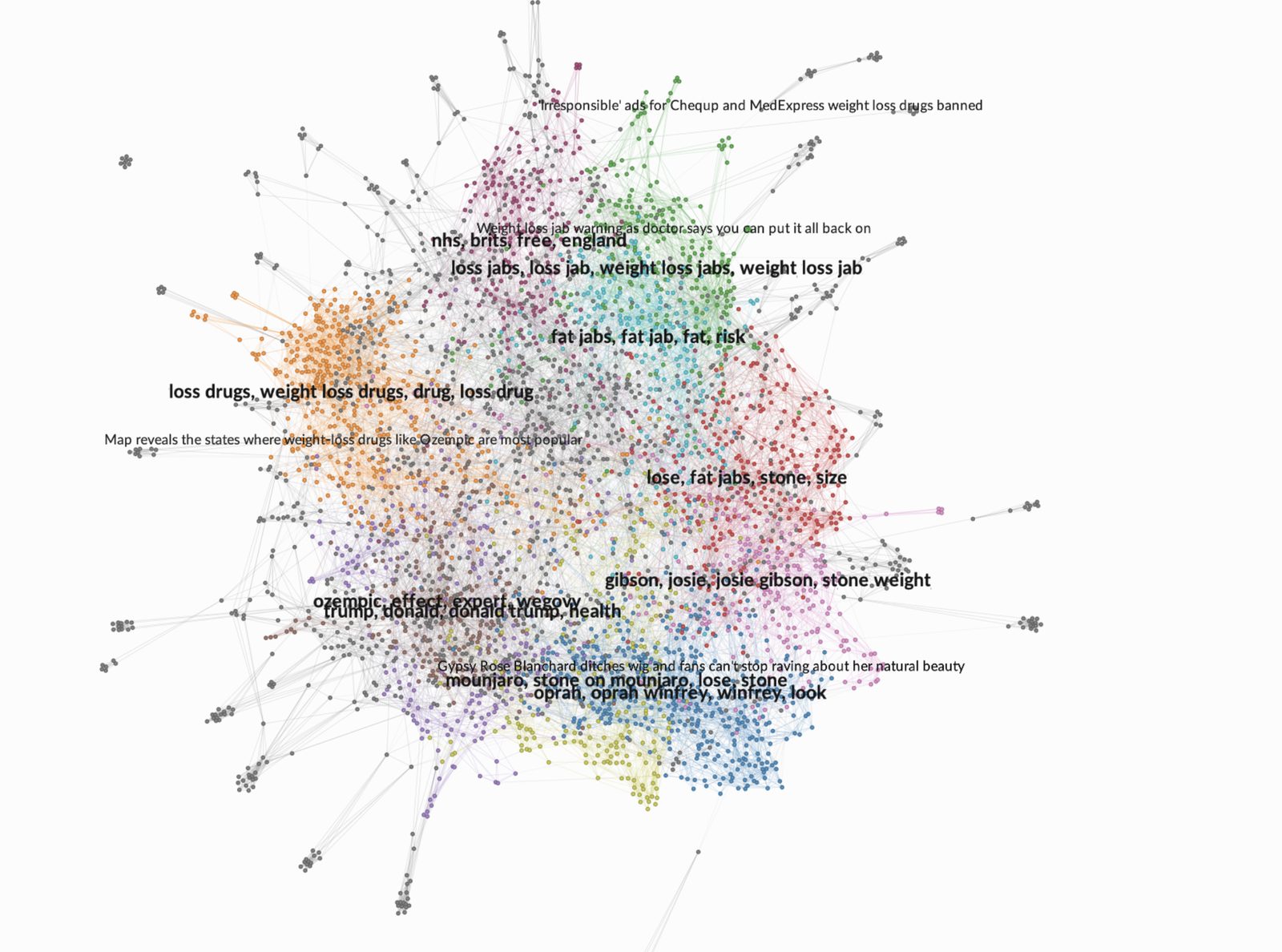
One shows concentrated thematic dominance around a specific health narrative. The other shows personality-driven event clustering with cross-category amplification.
Different structures. Different growth mechanics. Same underlying network logic.
The point is not celebrity gossip.
The point is pattern recognition.
Once you can see the map, you stop guessing what drives fame.
You start engineering it.
Reading Fame Across Different Markets
Each node in a FameMap represents a story in the media.
Not a keyword. Not an abstract metric. A published article.
When you look at Tyson Fury’s FameMap, you see personality-driven clustering.
Retirement announcements. Comeback declarations. Opponent negotiations. Netflix coverage. Associations with Tommy Fury and Molly-Mae.
These are not random spikes. They are engineered event cycles. Every retirement creates a new hook. Every comeback reactivates dormant media nodes. Every family association extends coverage into adjacent celebrity networks.
The map shows repetition around specific narratives. That repetition sustains recognition. Recognition sustains preference.
Now contrast that with a US personal finance FameMap.
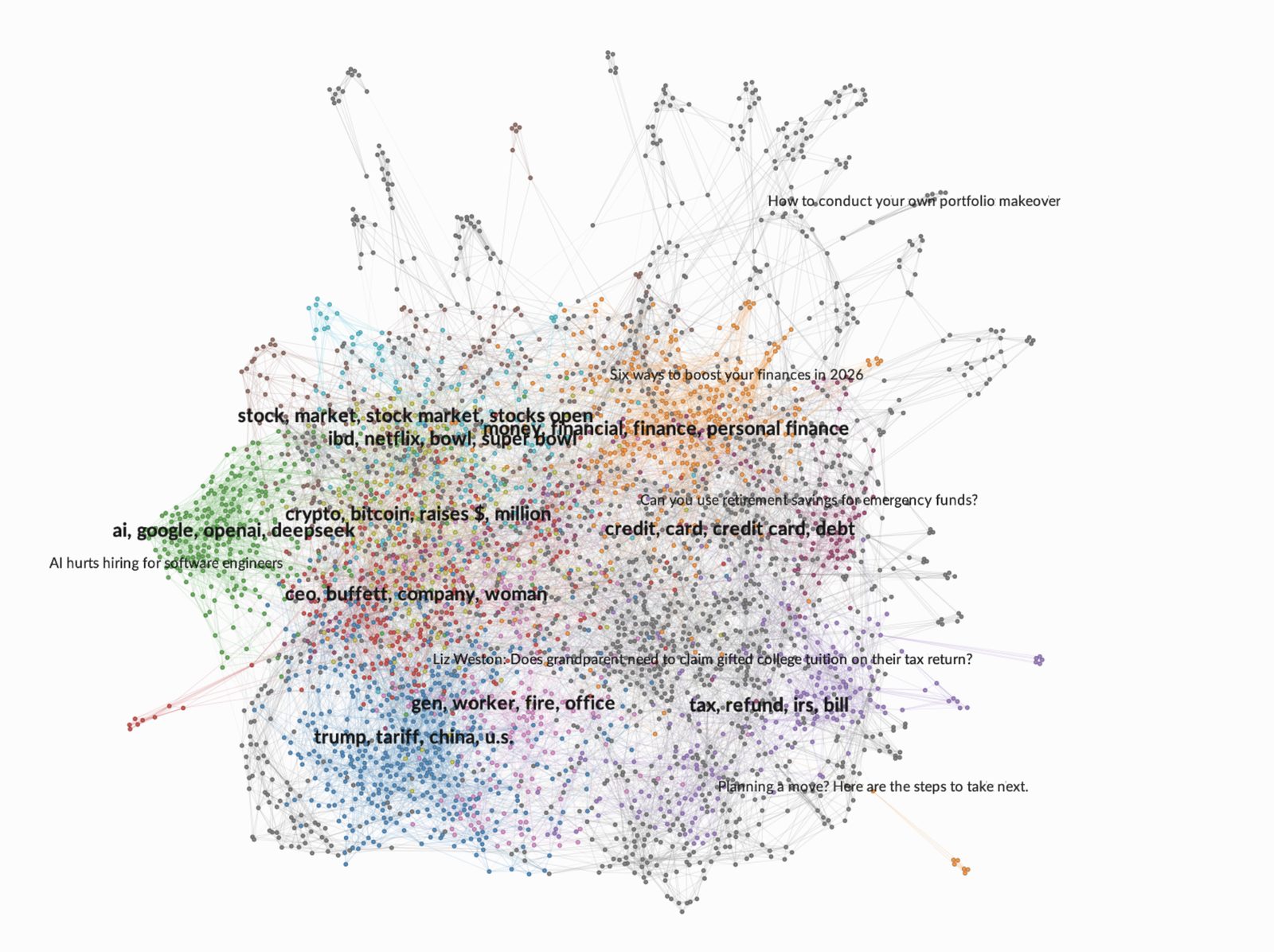
Instead of personality-driven event clusters, you see thematic gravity.
Stock market volatility. Personal finance advice. Credit card debt. Tax refunds and IRS policy. Crypto funding rounds. AI and hiring trends.
Thousands of stories forming dense hubs around macroeconomic themes.
In Tyson Fury’s case, fame expands through deliberate event creation.
In personal finance, fame concentrates around structural topics that journalists repeatedly cover because market conditions demand it.
Different drivers. Same network logic.
In both maps, you can see the direction.
You can identify which clusters are expanding. You can detect which themes are fragmenting. You can measure where media gravity is intensifying.
If AI-related finance stories are tightening into denser clusters, you know narrative weight is shifting there. If retirement-comeback cycles repeatedly regenerate coverage for a boxer, you know engineered disruption sustains relevance.
For a personal brand, this means designing repeatable event triggers.
For a category brand, it means aligning with accelerating narrative hubs rather than drifting into irrelevant visibility.
The insight is not about celebrities or headlines.
It is about understanding how fame behaves in different market structures.
Once you can see the network, you stop guessing what drives recognition.
You start allocating strategy against visible momentum.
What JBH Has Learned About Sustaining Fame
Popular things spread. But they do not sustain themselves.
One of the clearest lessons from analysing thousands of FameMaps at JBH is this: initial visibility is rarely the problem. Sustained visibility is.
You have to work to remain in the media.
That means creating events. Stunts. Activities. Original data stories. Opinion hooks. Partnerships.
All deliberately aligned to what you want to become famous for.
Fame is not a one-off spike. It is repeated reinforcement.
You have to keep reminding people you exist. You have to keep telling the market what you stand for. And you have to use media as the amplifier for that reminder.
But there is a constraint.
The media does not publish everything you want to say.
Journalists need traffic. Editors need relevance. Publications need stories that plug into existing narrative demand.
So the discipline is twofold.
First, you design events worth covering, stories worth telling and data worth sharing. Second, you build the right co-occurrences so your brand naturally belongs inside accelerating narratives.
This is why studying how others build fame matters.
Andy Warhol embedded himself with already famous figures. By associating with cultural icons, his own centrality in the network increased.
Kim Kardashian did the same. Proximity to Paris Hilton increased exposure. Repetition of association increased recognition. Recognition became leverage.
Association is not accidental. It is structural.
Our Fame Engine allows us to see this directly.
We can measure the value of specific media mentions. We can see which events triggered meaningful narrative expansion. We can track how those mentions align with a brand’s performance attributes, what we call its fitness signals.
Fitness signals are the characteristics that actually drive competitive advantage.
If your PR generates coverage that reinforces those signals, fame compounds in the right direction.
If your PR generates coverage disconnected from those signals, you may become visible, but not strategically stronger.
In other words, we can distinguish between meaningless fame and economically aligned fame.
That is the difference between noise and leverage.
The Strategic Question for CMOs
So here is the uncomfortable question.
Are you building traffic?
Or are you building fame?
If your media presence disappeared tomorrow, would your demand collapse? Or would recognition carry you?
At JBH, the Fame Engine exists because most brands cannot answer these questions with evidence.
They can report impressions. They can report clicks. They cannot report contextual dominance.
In markets where small recognition differences create large economic divergence, that blindness is expensive.
Search engines tell you who is looking.
Fame tells you who will look next.
In an AI-shaped, scalable market, optimisation captures today.
Fame determines how much of tomorrow defaults to you.
And in superstar markets, being slightly more famous in the right context is not indulgence.
It is leverage.
And leverage compounds.
Get Your Free FAME Map
To celebrate the launch of our FAME Engine, we’re offering three FAME Maps and PR Consultations to select brands.
This gives you the opportunity to see if your PR is actually working for you or against you.
If you’d like your free FAME Map, then message me. You have to be a brand, and we will be selective about who gets them.
But this consultation will help you to better understand if your PR is driving the right kind of fame.
Andrew Holland
Originally published on LinkedIn on 20 February 2026.