
In this article, I go deep into SEO pricing.
You’ll learn:
The problems facing SEO pricing.
Why SEO pricing remains low.
The issue with ROI.
Options for pricing differently.
A new SEO service I wish existed.
And a lot more.
The Problems Facing SEO Pricing.
We are going through a pivotal time in marketing right now.
Marketing effectiveness is front and centre, and people are reducing spend on marketing globally.
However, in the land of SEO, you wouldn’t know.
As a director of SEO, I get involved in pitches for SEO and digital PR contracts.
I get to see what other agencies charge.
In reality, the price of SEO services has remained relatively unchanged for the past eight years.
One of the first challenges I faced when I went from running my agency to working at multi-seven-figure ones was the pricing.
Here I was, thinking that big agencies charged huge price tags…they don’t.
Sure, there are outliers to this. Some companies invest a small fortune into SEO, but generally, they don’t.
But why?
A mix of attribution issues, industry distrust, poor results, being burnt by agencies, being burnt by Google updates…
The list of reasons is endless, but the reality remains the same.
SEO is a low-priced industry.
So, What’s the Average Amount I See Being Spent?
For most budgets, SEO services cost between £2000 and £3000. These include tech SEO tasks, content, reporting, and account management.
Links are usually extra and start for many at budgets of £1000 to £10,000.
Of course, some people charge far more or less, but generally, that’s the average agency fee.
But this is why it needs to change.
We’re not being paid for the value we deliver because that value is not understood.
SEO is a Growth Marketing Tactic
One of the significant issues SEO agencies face is trying to prove or show ROI.
This sets SEO up for failure from the start.
Let me explain.
In 2004, business professor Tim Ambler wrote what many consider the classic text on ROI: “ROI is Dead: Now Bury It“.
In the article, Tim states:
ROI was devised for assessing capital projects where the investment is made once and the returns flow during the following years.
The problem, however, is that when business owners ask about ROI, they essentially ask:
“When can I expect to see more money than I pay you?”
I understand this approach.
In a world of high costs, people want every penny they spend to work hard. And to address this, SEOs have developed a range of industry-standard statements, such as ‘in 6 months, 12 months’ or the ageless classic ‘it depends’.
This puts SEO agencies on the clock to deliver ROI in whatever time frame they’ve sold at.
However, in the same article, Professor Ambler also states:
ROI gives a false picture, partly as a result of excluding longer-term cash flows, the effects on the dynamism of the business and brand equity. In fact, a drive for increased ROI will ultimately destroy any business, because the cash-generating activity is penalised relative to short-term profit. The example is typical: reducing advertising expenditure usually increases ROI.
Of course, he’s talking about advertising, not SEO here.
SEO is not the same as advertising. We are mainly building what is known as physical/ digital availability.
Through rankings, we are making it easy and convenient for customers to buy from us.
While it’s true that we can, through buyer intent content, build some mental availability, ‘the likelihood of being chosen in a buying situation’.
SEO is not what anyone would call advertising.
The vast majority of revenue in SEO is derived from high purchase intent rankings, which makes us more like product placement.
That’s still a good place to be.
Google is the most significant ‘store in the world’, and every keyword and SERP has its own aisle that search engine users scroll down.
This is powerful. We put brands in front of buyers right as they are looking into buying.
So why won’t people pay more for SEO?
The Illusion of ROI and ROAS
Among the barriers to the growth of SEO budgets is ROI and its bodyguard, ROAS.
Return on Ad Spend is the most significant day-to-day reason SEO doesn’t get invited to the Prom.
Business owners, CFOs and marketing managers love the terms ROAS and ROI because they deliver near-immediate correlation to spending.
Money goes out, and customers come in.
The reality, however, is not accurate. We know many of those sales would have happened anyway, and Return on Ad Spend is essentially a credit scheme.
You’re taking a complicated subject such as marketing, ignoring all the work that goes into marketing, such as brand positioning, content, advertising etc.
Then, give credit for the final route to purchase.
This creates an overly simplistic illusion: Brands spend a lot of money on paid search, and ROI/ROAS is a metric they receive to keep them happy.
Call it a happiness tax if you want.
Brands are acquiring customers, often at enormous costs, but it looks brilliant on paper.
And this happiness tax is something that SEO cannot offer.
Arguably, we’re the ‘unhappy tax’.
But that’s because nobody is motivated to sell or market SEO properly.
As an industry, we are terrible at promoting ourselves.
SEO is Not Paid Search
Paid search is, by definition, direct marketing.
You are spending money to gain a direct response, namely a sale.
This is not what you are trying to do with SEO.
Instead, with SEO, you are trying to reach people using organic search to help them make a purchase decision.
The key here is you are increasing the visibility of your products or services to people who are NOT READY TO BUY TODAY.
These people are in what is called by Google, their ‘exploration’ phase of search.
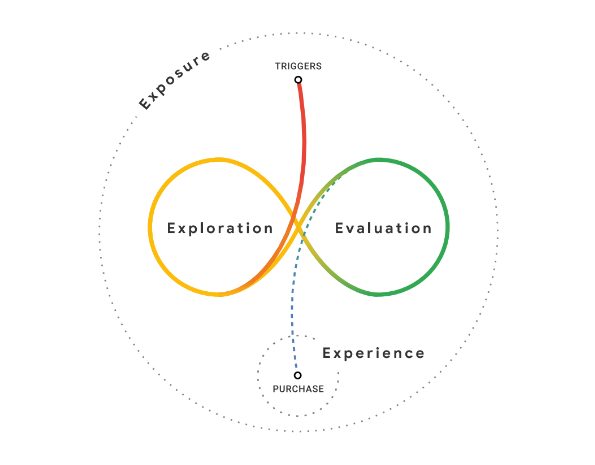
Brands that do a good job in the messy middle of search and show up to answer prospects’ questions and concerns increase their chances of being included in a consumer’s evaluation set.
When you do this, you vastly increase the likelihood that you’ll be among the ‘evaluation’ set of preferred brands that the consumer wants to buy from.
Paid search in these situations is often just the last click.
In other words, SEO targets people before they are ready to buy, increasing the chances that they will buy from you.
So, what could SEO do for your brand?
SEO Can Double or Triple Your Revenue
Given that SEO reaches people in the exploration phase of search, it would be madness for paid search marketers to target these search users.
To do so would decrease ROAS and ROI.
And this is where the magic of SEO comes into play.
You are reaching a huge number of people in the market who are not being targeted by others and who want to buy what you sell.
And this is the key.
You’re reaching a large number of buyers, and in the process, you could double or triple your business’s revenue.
So, what should this cost?
What SEO Should Cost (and why we don’t get the revenue)
As stated, most SEO retainers sit around the £3000 mark, give or take.
SEO retainers should probably be between £ 10,000 and £30,000 a month, often more for large online brands.
But how can I come up with such numbers?
Let me explain.
For some time, SEO has been priced low because paid search takes up the vast majority of the marketing budget.
This spending reaches the point of diminishing returns, also known as the Performance Plateau.
Once you reach that point, you cannot earn much more from paid search, meaning that to grow, you need to find a budget elsewhere.
This will, of course, eat into profits because paid search must always be on.
You can’t switch it off, or you’ll lose sales.
Any budget you need for SEO will be scrutinised and probably have to go through procurement.
But when you consider what SEO does for brands, how many ‘in-the-market buyers’ you reach, and how this influences them, you can see that SEO is hugely valuable.
Trust me, brands who lose their rankings spend a lot to get them back!
Of course, the marketing manager must be brave to take the route of high SEO retainers.
Who wants to risk their job by asking for another £120,000 in marketing budget that you’ll spend on an agency?
All of this then leads to low retainers.
In other words, people are prepared to gamble a little on SEO but not risk their jobs.
But is there another way to look at this?
Pay For Optimisation, Not Marketing
One major issue that causes SEO investments to fail is that we are expected to provide ROI, like paid search.
However, this is the wrong way to think about this.
A better way to think about this would be to split SEO up.
The optimisation of a website should not be considered a marketing activity; it should be regarded as an investment in a business asset.
In this regard, SEO is more project-based than retainer-based.
SEO is seen as a service cost for digital infrastructure building.
Within this framework, SEO would have fixed deliverables such as technical work, content enhancements, etc.
But once the jobs are done, the jobs are done.
This would then place the activity of building links and digital PR as the monthly retainer element of SEO.
So where would ROI come into this?
Results in SEO Happen Once You’re Ranked
As stated, SEO increases your brand’s visibility to large amounts of buyers.
You do it to increase your business’s revenue over time.
However, ROI does not start to flow until you’re ranked. Revenue gains are mixed in with the customer’s lifetime value, profit per customer, and cost per lead. Not to mention the impact of other marketing channels and, of course, the reduction and dependence on paid search.
These are things far beyond the ability of most SEO agencies to work out when paid low-cost retainers. They require a lot of ‘figuring out’.
There is a world of project-based SEO where viability and ROI are worked out as part of paid consultation.
Perhaps payment strategies could look like this:
Project 1: SEO strategy, ROI and viability testing: 10 weeks of work, cost £15,000
Project 2: Site optimisation: 6 months of work, cost £60,000.
Monthly reporting: £6000 per six months.
Total cost: £81,000.
It doesn’t take a genius to figure out that you could combine the above and make it into a retainer.
However, the point is that once you escape measuring SEO success through short-term ROI, you will look at SEO as an investment.
By viewing SEO as an investment, you can calculate its long-term ROI and determine when it will benefit a business.
Perhaps this is what the world of SEO needs now.
A service or SaaS dedicated to determining the long-term ROI of organic search for customers and the cost of achieving it.
However, the idea of ‘what to pay’ for SEO might now be so embedded in the culture that only supply and demand issues within the economy can change it.
We may always be stuck with low retainers simply because people are addicted to paid search.
This is why it’s important to invest in SEO as early as you can and make it part of your marketing budget.
Blasting most of your budget on paid search will earn you more money in the short term.
But you’ll need to find money to fuel further growth later on.
And if this is you, perhaps selling SEO as a digital infrastructure investment might be an easier win…for us all.
Food for thought.
Thanks for reading.
Andrew Holland
Originally published on LinkedIn on 4 February 2025.