
In this article, I’ll look at what AI search engines want.
I’ll show you:
What I think they want.
What they think they want.
How to Maximise Search for AI.
Let’s dive in.

It was last night that it dawned on me.
Google, as the dominating force in search, is going to be over.
Here’s what happened.
My daughter came to me with a simple question.
“What are dogs whiskers for?”
So, with my daughter and Cockerpoo Ronnie sitting beside me, I got the answer in seconds.
It was only after that I realised what I’d done.
I opened the ChatGPT app and got the answer there.
I didn’t go to Google. My instinct to get the best result was ChatGPT
I’ve probably done this before and not realised it.
But if I had gone to Google, I would have received this (on their desktop).
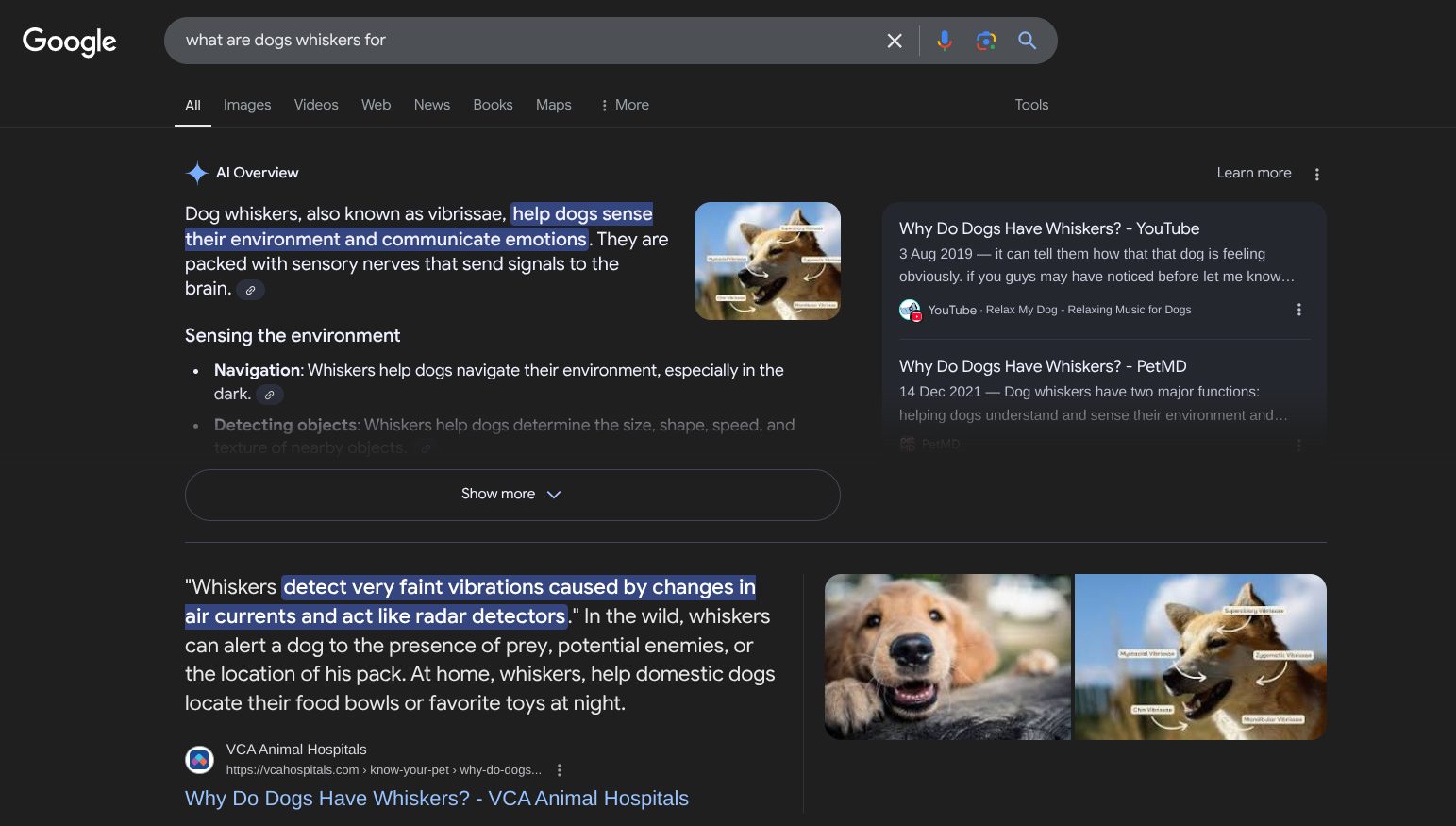
It’s a total mess of competing information.
But I got this from ChatGPT (the same was on desktop and mobile).
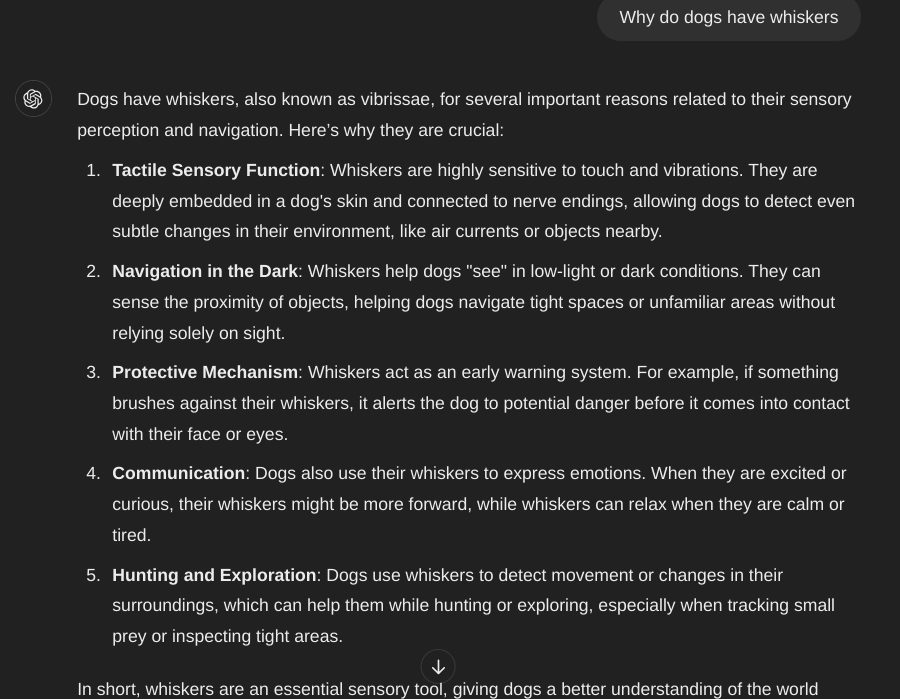
It was easy to read and told me what I needed to know.
But why didn’t I use Gemini?
Well, let’s face it: that app is a bit of a mess, from severe limitations to poor marketing and mixed results. Gemini feels a little like Google +. They had to launch it, but it sits among a collection of Google’s AI products, all of which have potential, but it’s in the early days.
Gemini feels like it could be canned or replaced at any time. And it oddly seems to compete with Google, and as we’re seeing, it seems that it will be part of existing products rather than an app you use.
Of course, I’m an early adopter of AI search.
It could take years before AI search takes over from Google, but the end is coming.
As we all know, Google is an absolute mess right now. Their search results are chaotic, and page 1 is basically just ads these days.
But this begs a few questions.
How to rank in AI search/ tools and what do they want from us?
What AI Says it Wants
When you ask AI for what it wants from you to be mentioned or ranked, you’ll get either the usual ‘Google stuff’ or occasionally a touch of honesty.
For example, here’s what AI tool Perplexity tells you:
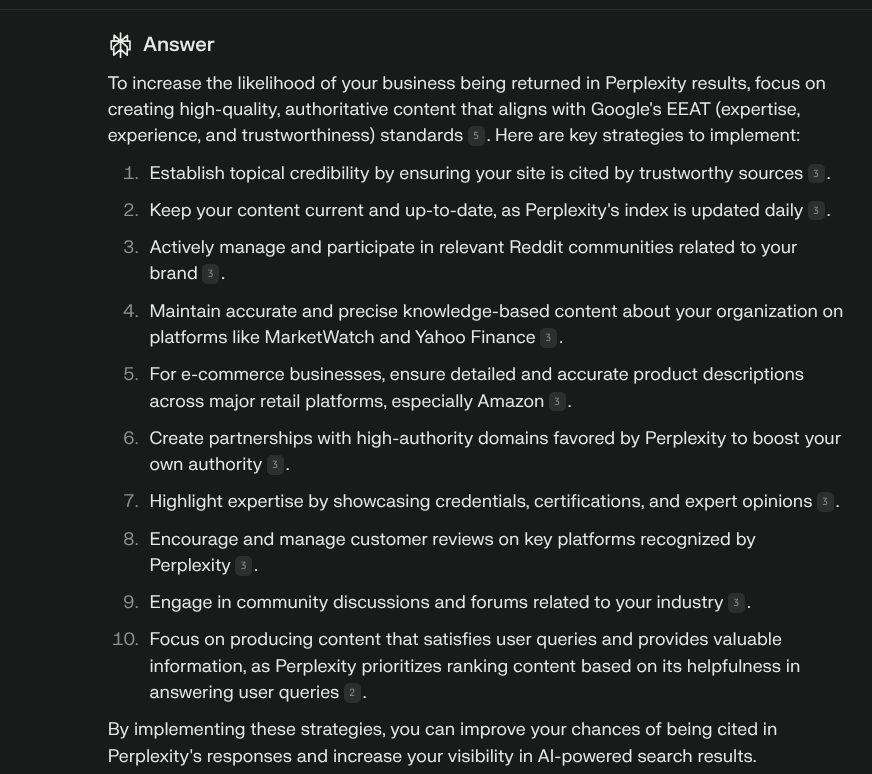
But among them are 3 of note:
Establish topical credibility by ensuring your site is cited by trustworthy sources.
The link they cite is an article: https://www.brightedge.com/perplexity
Create partnerships with high-authority domains favored by Perplexity to boost your own authority.
Again, they cite the same article.
Create partnerships with high-authority domains favored by Perplexity to boost your own authority
Again, the same article is cited.
It’s not that these may or may not be true; it’s just that Perplexity gives you an answer based on the content of others.
This shows how much they rely on external information.
But what do I think?
The Reality of Ranking in AI
Something I’ve been quoted recently as saying is this:
Open AI has no idea of the level of SPAM the SEO industry is capable of producing at scale
And yes, this is true.
Once SEOs start to figure this out, they’ll smash AI with all kinds of mess, and possibly, I’m about to add to it.
So, what I’ll say is this.
If you want to rank in AI for terms related to your business, the goal is to feature as often as possible in the training data used by LLMs and also focus on conversational terms that prospects are using while searching online.
Right now, this is being featured on media sites, mentions on forums and list posts.
I know that because we’ve tested this, and so have others I know.
This all started several months ago when we started seeing ourselves referenced on digital PR searches in AI.
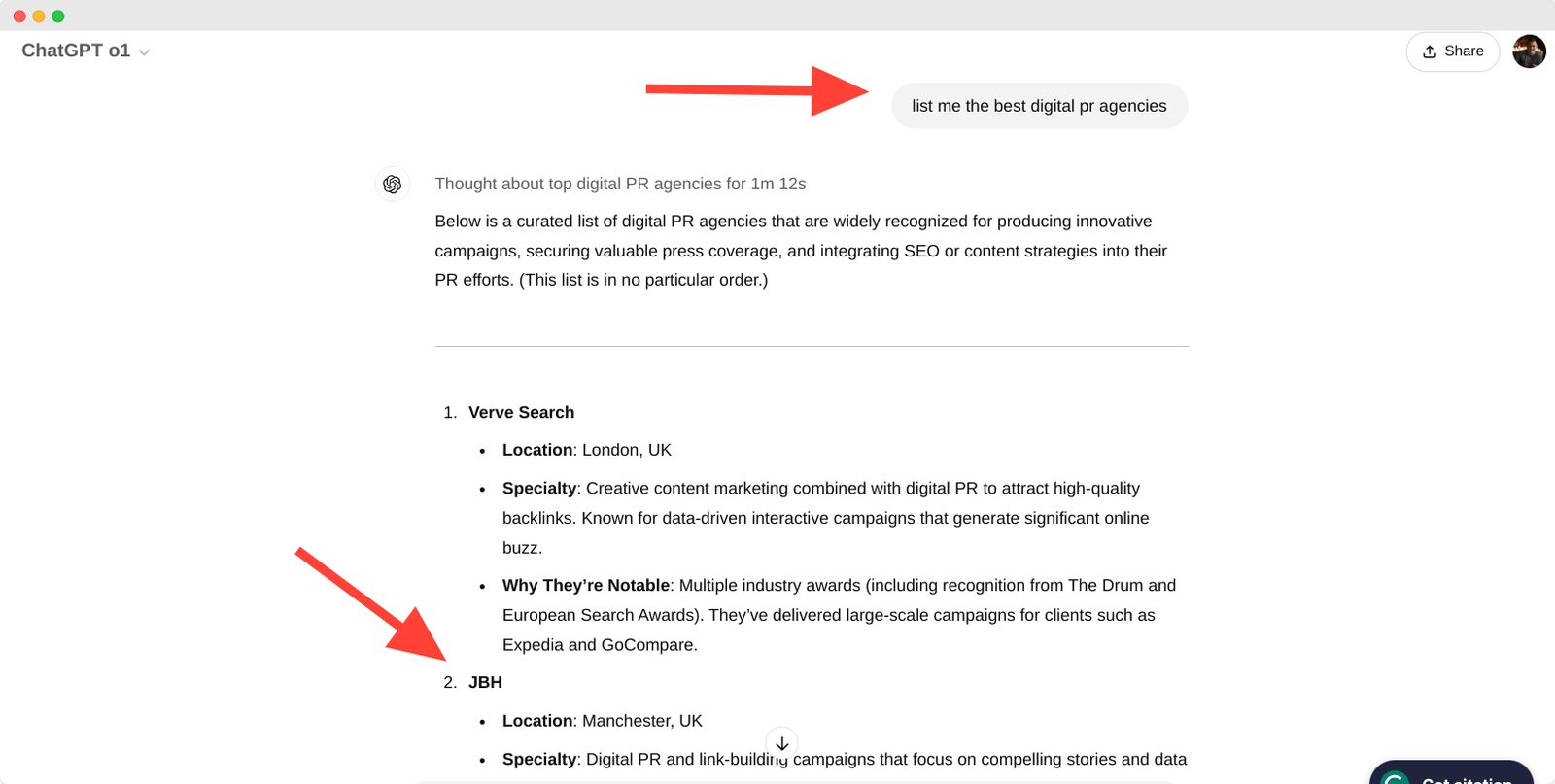
What we wanted to know was what was fuelling this.
Well, once you dig into the data, you start to see where AI is getting its information from:
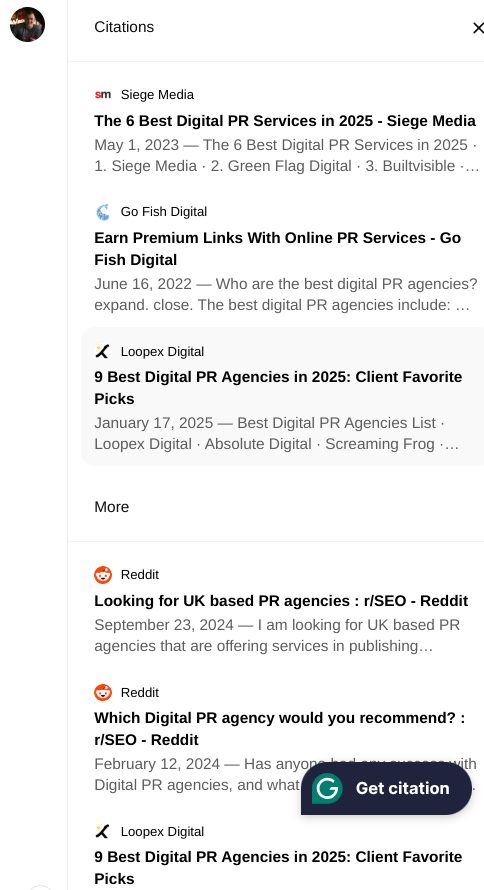
As stated, list posts, mentions in forums and media mentions.
You can see just how easy this kind of thing is to manipulate.
Right now, agencies are creating self-referencing list posts to be included in AI search results for evaluation terms.
What I call ‘evaluation terms’ are modifiers to search terms that you would normally not rank for yourself but would be included in the lists of others.
“Best”
“Luxury”
“Top”
Etc
I could go on, but you get the idea.
However, people are creating self-referencing list posts, after all, who said you need to wait for others to include you?
So, do I think you should start creating list posts?
Well, you need to consider being in control of the narrative with a rationally optimistic mindset.
But if you want to go and start trying to rank in AI, understand that searching in AI is still relatively new, and the goalposts can change at any time.
So my advice is to do any AI optimisation with an experimentation mindset.
It’s early days in AI, but you can start to see where this is heading.
Take the citations for a GPT search I made for the ‘best gold watches for a retirement present’:

AI search is in its infancy, with marketers being early adopters.
And how AI chooses products and services to display might change.
But for those who think SEO is dead, I’d argue that we are entering a new phase of SEO in which links are no longer the currency but mentions are.
AI influence and optimisation might become a key part of SEO in the future.
Now, the headline in this article was about what AI search engines want.
While I’ve probably not explained it well, I hope this sentence will clarify.
AI search engines want an easy life.
We will likely win if we can make their ‘lives’ easier by ensuring we create plenty of reference information related to search terms you want to rank for.
And I appreciate that AI is not alive, and therefore, I can’t make its life easier, but you get the point.
If you sell dog food and your food is the best for Cockerpoos, you must ensure you’re on every list, forum post, and YouTube video covering this subject.
This is good marketing anyway.
But in this crazy AI search world, it appears that you don’t need to wait for others to add you to a list; just go and create your own.
And yes, I’m stopping here now because it’s clear that there are plenty of ways to spam this approach.
Thanks for reading.
Andrew Holland
Originally published on LinkedIn on 27 January 2025.