In this article, I’ll reveal the SEO secrets that nobody is talking about but will dominate 2025.
Well, I say SEO. In truth, these are also content marketing tactics, but the 2 fields are so engrained that if you do one, you’ll probably do some of the other.
You’ll learn:
How to reach buyers in an AI search and zero-click world.
Where your SEO strategy should focus in 2025.
The content marketing formula to ensure maximum sales success.
And a lot more.
But before we dive in, here’s a quick reminder.
If you’re looking for Digital PR or SEO services, our award-winning team is ready to help. Click the link below to find out how we can help you.
OK, let’s dive in.
The New Secrets of SEO Success
2025 SEO will be hugely different, and exploring these secrets will change the game.
Here are 4 ‘secrets’ to success in 2025 that people aren’t talking about.
Secret 1: Leverage News to Reach in the Market Buyers
All we keep reading in SEO is how organic traffic is down.
And yes, it is, and AI will reduce it further over time. We are entering a zero-click world.
So, to reach and influence buyers, you’ll need a new approach. Well, it’s an old approach, but as the saying goes, nothing is ever truly original.
Over the years, brands have seen digital PR as a pure link-building tactic.
Not any longer.
Digital PR is now a revenue-generating one.
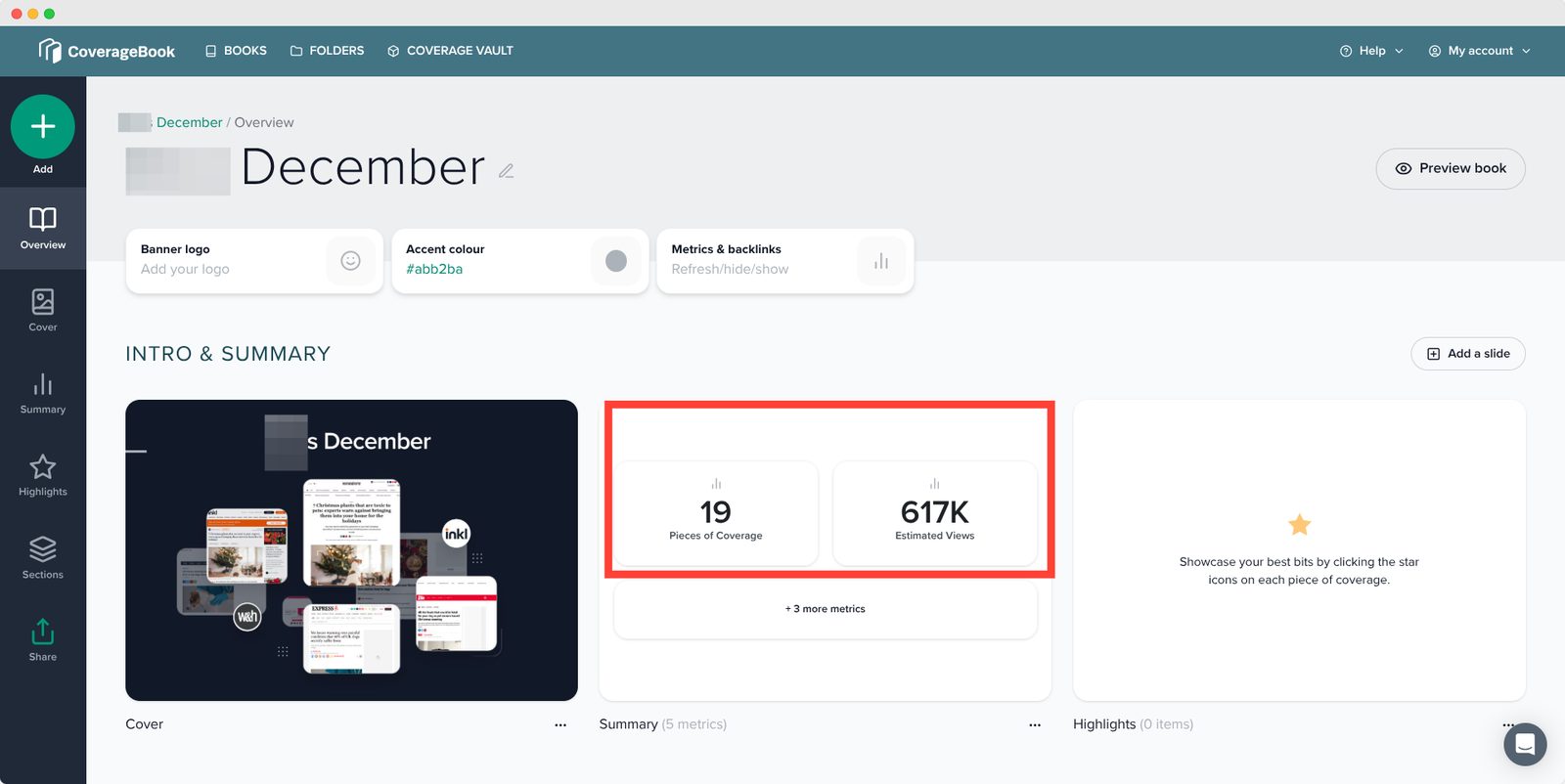
If the image above is unfamiliar with SEOs, it’s because it is from a PR tool called Coverage Book.
This tool monitors the reach of publicity campaigns and gives estimated figures based on publications, interactions and social shares.
In the past, people would say, ‘Yeah, but…’ and throw some sales figures from paid search into the mix.
But things change.
Today, publicity is akin to advertising, and digital PR is nudging ‘in the market’ buyers, building fame, and telling people you exist.
It depends on how you do it, of course.
How this works is quite simple.
Let’s say you sell electric vehicles.
There are all sorts of things happening in the electric vehicle market at the moment.
Perhaps you could contact journalists with a story like “Electric Vehicle Expert Lists the Most In Demand Models of 2025.”
I’m not a PR, so you’ll have to use your imagination for a better hook.
People interested in electric cars get sent the article via Google’s (and other platforms) algorithmic discovery feeds.
At this point, the article, which features your brand name, is read by an audience that is directly interested in this type of content. Some of these readers will be in the market to buy what you sell.
And then a few things can happen:
Click through to your site.
Search for your brand later.
SERP recognition and click-through. (If you rank on page 1).
This is how you nudge more buyers into buying from you.
Of course, many readers won’t be in the market to buy. That’s fine.
What’s happening is the nudge of ‘in the market’ prospects.
I tell everyone that they should have a digital PR retainer as standard because the brand benefits are immense.
You tell people you exist.
You build those important links and mentions.
You impact sales revenue.
You can generate leads.
You get featured on websites used in LLM training data.
Digital PR in 2025 will be a method to reach those you want to sell to. So, it’s something you should be considering.
And to indicate the scale, we reached an estimated 617,000 people in December for one client.
To do this, we gained 19 peices of coverage, which landed plenty of backlinks.
Digital PR is going nowhere, and the data for its use is only getting stronger.
Secret 2: The 3F’s of Modern Content Marketing
I learned this technique from the team of System1 who look at the performance and creation of advertising that leads to brand growth.
Content marketing is a subject that has fans and haters.
It’s not that people don’t see the benefit of using content; it’s just that they tend to use it to gain traffic without considering its intended purpose.
If we want to use content to succeed, we must abandon traffic metrics and start viewing content marketing as advertising.
Adopting the same behavioural science fundamentals that guide brand growth from advertising makes sense, and the 3 F system used by System 1 does as well.
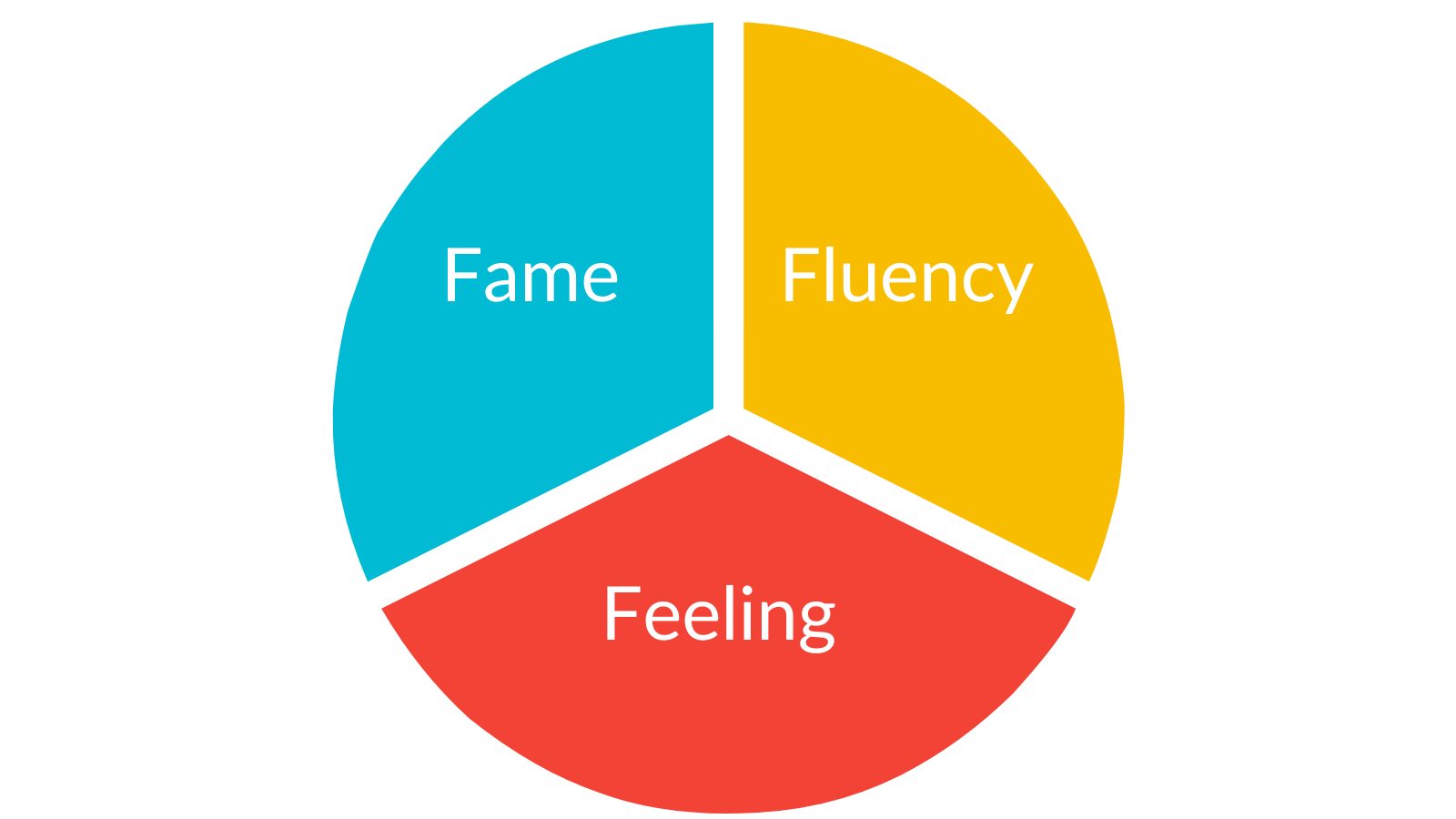
The 3Fs stand for:
Fame (Availability Heuristic): Choices are influenced by what comes readily to mind. If a brand is well-known and mentally available, it becomes a good choice.
Feeling (Affect Heuristic): Positive emotions simplify decision-making. If a brand feels good, it’s perceived as a better choice.
Fluency (Processing Fluency Heuristic): The ease of recognition shapes preferences. If a brand is easily processed and understood, it’s more likely to be chosen.
As stated by System 1 in their research report:
Fame, Feeling & Fluency – the 3 Fs – underpin most decisions by most people. They require a fraction of the effort required to fully consider a choice. Since most brand decisions are quick and easy, the 3 Fs drive brand growth.
So, the 3Fs should be a focus in our content marketing strategies (and also PR).
But how?
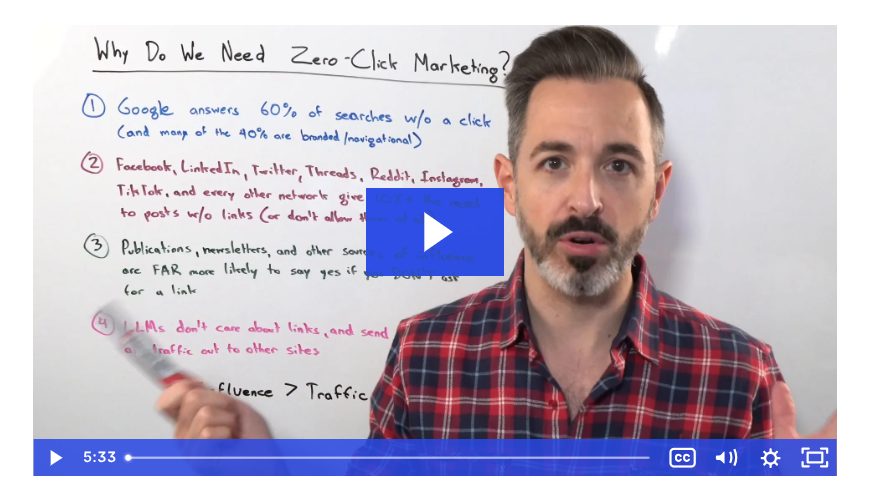
Rand Fishkin is an example of someone creating content that builds fame for his product Sparktoto and actually makes people smarter (that’s a good feeling) through his Sparktoro blog.
His content is not for SEO or traffic but for humans.
Others doing this are Glen Allsopp with his numerous articles, Seth Godin, James Clear and Pat Walls to name but a few.
This article is an example of how I am doing the same.
We are back in the trenches of creating content for humans and promoting this content.
Yes, much of this will not land, but you’ll build up your audience and grow over time.
For small brands, now is the time to start this approach, and if you need help with this, feel free to message me.
Secret 3: Assess and Build Your Physical Availability (aka Bottom of Funnel Presence)
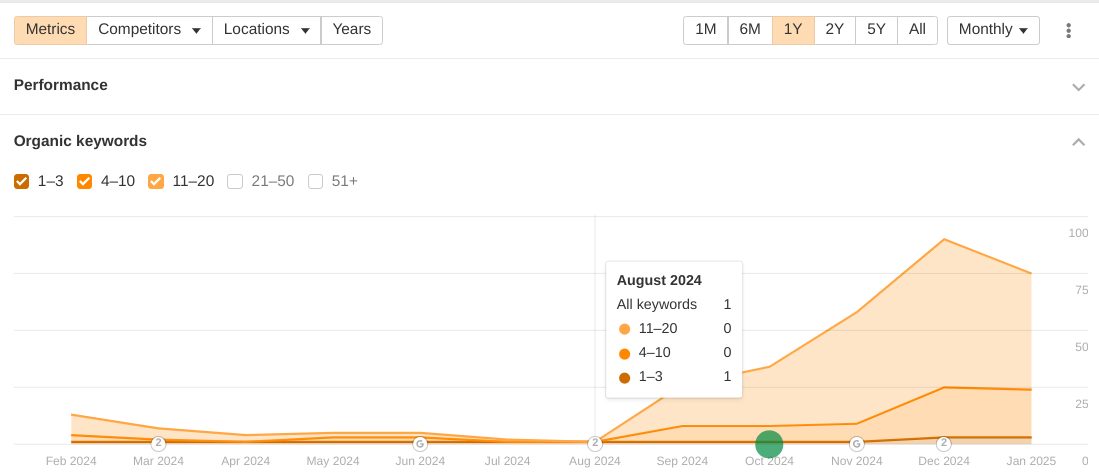
Physical availability: the ease and convenience that someone can purchase from you is key for growth.
This is all about being at the bottom of the funnel in SEO terms.
Being at the bottom of the funnel, you’ll rank for high purchase intent terms and generate leads for free.
This is modern SEO in 2025. If you aren’t building bottom-of-the-funnel rankings, you aren’t driving growth.
Regarding the bottom of the funnel, I’m not referring to VS-style posts that attract a few people (Software x vs Software y).
I’m talking about the big juicy buyer intent terms people pay Google Adwords for.
That’s the goal of SEO. To rank your sites and pages for things that create leads/ sales. So, in 2025, you must build out your physical availability online.
SEO Secret 4: Word Embeddings
Embeddings encode data—such as text, images, videos, user behaviour, music, or more—into points within a multidimensional space. The positioning of each point reflects its semantic relationships and meaning.
Google uses word embeddings in numerous ways, and if recent updates have hit you and are scratching your head as to why, embeddings might be the answer.
As Google’s NLP prowess increases, its search engines can dial up the use of embeddings.
You might be asking, “How can we optimise for embeddings?”.
In truth, it is all about writing well to enhance the information gain rate and semantic relevance.
At JBH, we have a system for this. However, you aim to create information-rich content that matches the search intent, which can be challenging for non-subject matter experts.
Expect SEOs to heavily use words such as NLP, embeddings, and cosine similarity in 2025.
My advice is to start studying them now.
Ok, so that’s (some) of the secrets for SEO success in 2025.
Here are some things to check out and learn.
Why You Shouldn’t Start a Substack
I got banned on Substack a few years ago.
What happened?
Well, pretty much nothing. I wrote a post and added links to my paid course, but they banned me because they felt my articles were used primarily for selling and not writing.
This was two years ago, but I’ve seen a few articles that generally portray Substack negatively in recent weeks.
First off, you have this from Seth Godin:
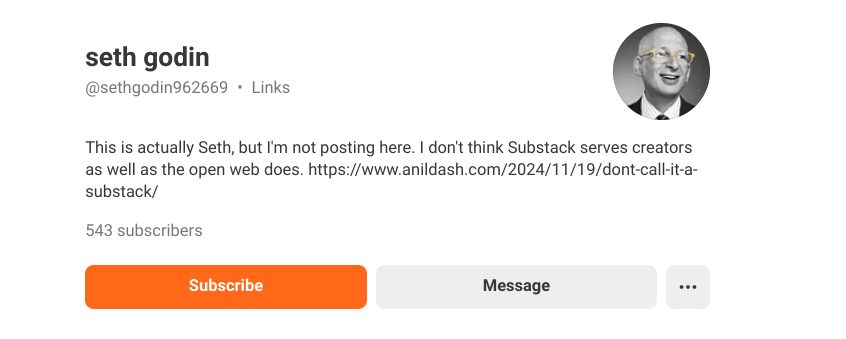
Here’s the link to the article he references: https://www.anildash.com/2024/11/19/dont-call-it-a-substack/
And here’s a link to another article around Substack: https://medium.com/westenberg/substacks-ticking-time-bomb-5eb6f1469dbf
I still read Substack content from numerous publishers, but I was shocked at how aggressively they terminated my newsletter (for adding a few course links).
And that’s the key thing.
We use the terms ‘newsletter’ or content to describe ‘modern blogging’.
Email marketing lets you directly converse with your audience and send them whatever you like.
The elephant in the room is that I’m writing a newsletter on LinkedIn. But I’m doing that to build mental availability on a platform where my prospects are.
So, you should consider your goals before starting a Substack and check out those articles.
Andrew Holland
Originally published on LinkedIn on 20 January 2025.