
In this article, you’ll learn:
Why you should focus on problem and not topical authority.
The 2 types of content you should create.
Let’s dive in.
Why Topical Authority is No Authority.
I’m writing this at 11 am on a Sunday.
A few minutes earlier, I was scrolling through LinkedIn and read three posts from SEOs selling ‘topical authority. ‘
The idea behind Topical Authority is that you publish many blog articles that are semantically related and structured in such a way that sends all the right signals to Google.
All so that your site ranks higher for search terms and you maximise the authority you gain.
On paper, this makes some sense. A website that centres around a specific topic is likely to rank higher for search terms because they are an ‘authority’ on the topic.
However, this strategy runs into difficulty in 2 areas:
When a website goes too broad.
The marketing effectiveness of this content.
We all know that Google is taking traffic from big websites that deployed this model, and also, we all know that much of this content does nothing from a brand or revenue-building approach.
But there is a solution.
Problem Authority: The Route to SEO Success
There are 2 competing rhetorics in SEO:
Content to be discovered through search builds brands.
Product, category and service pages are the most essential but difficult pages to rank.
The topical authority model took both rhetorics and gave SEOs a stick to sell clients.
The idea was that if you create topically relevant content, your product, category and services pages will rank higher.
But the reality is not the case.
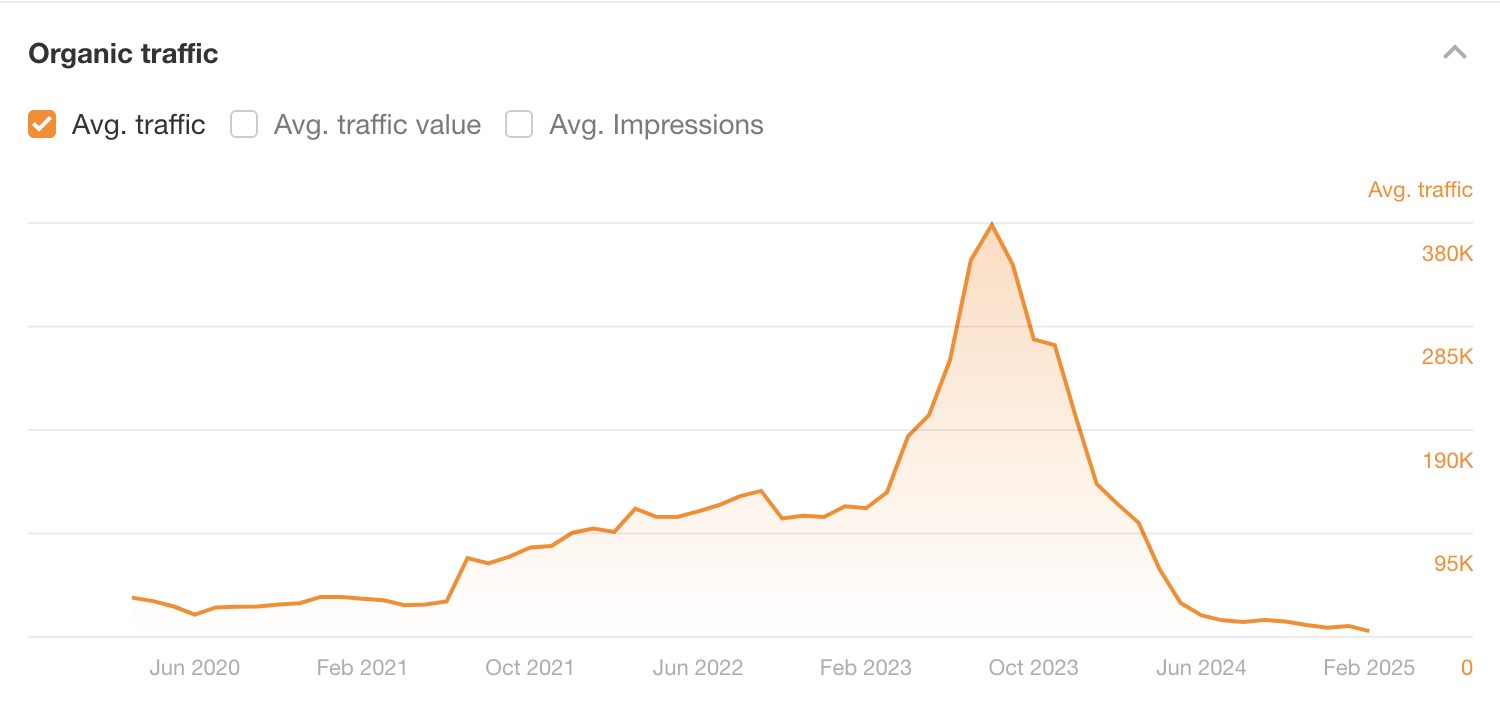
Below are screenshots from sites that SEO experts have stated used topical authority.
Site 1:
Site 2:
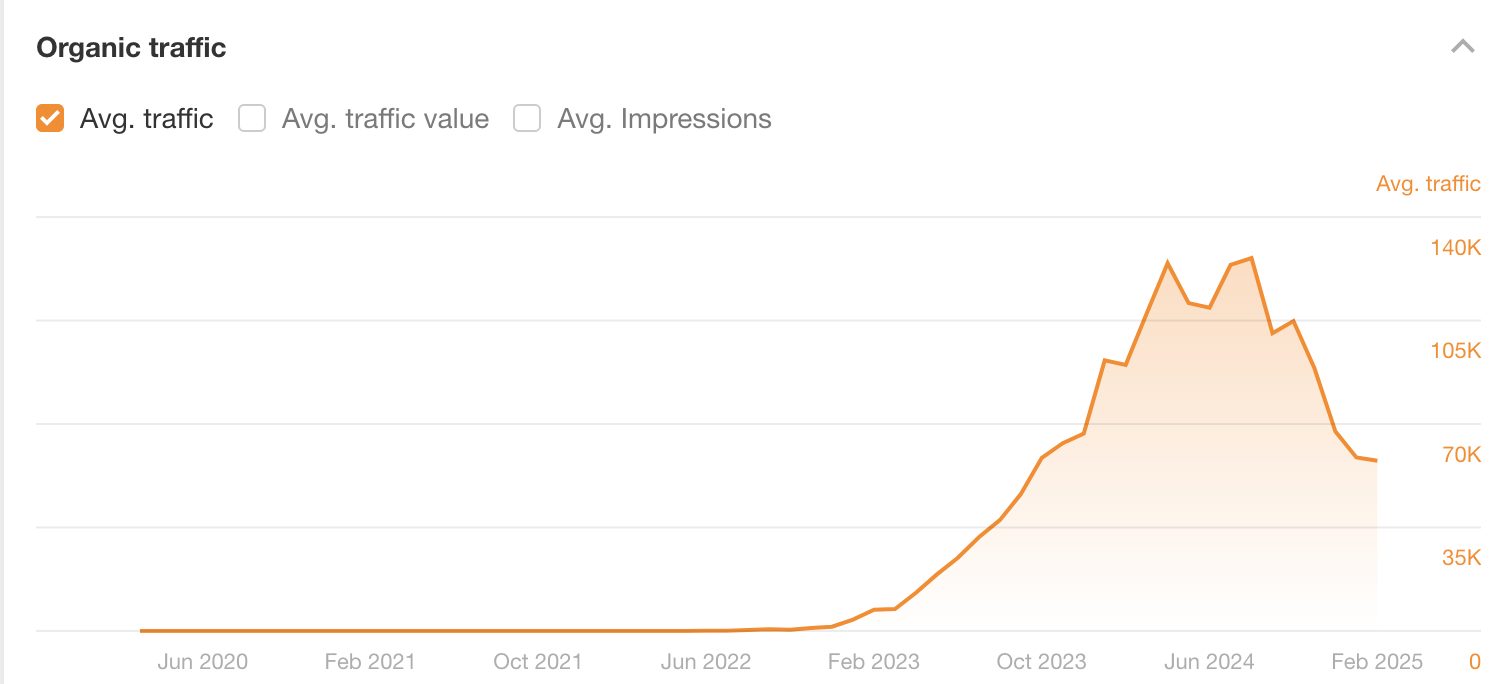
Site 3:
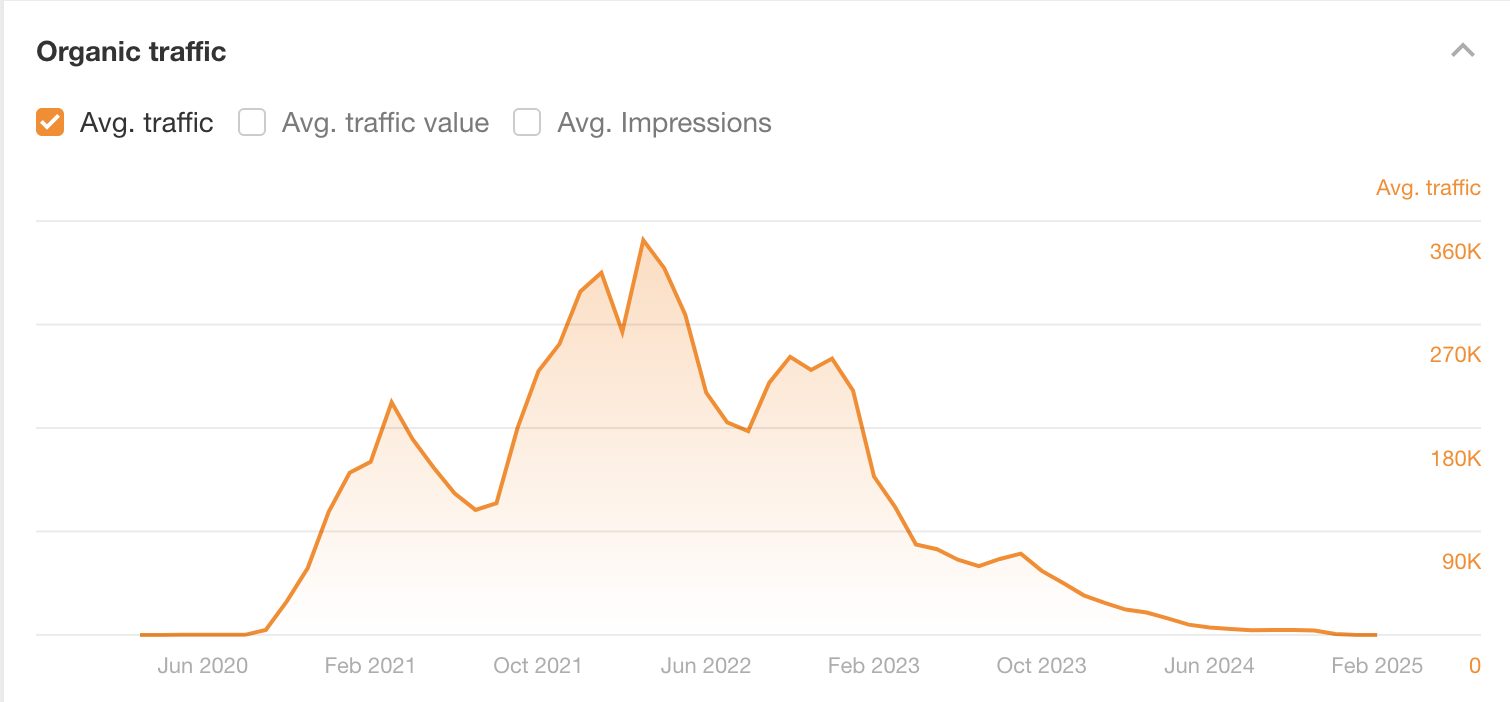
Of the 11 sites in my SEO database that have publicly used topical authority (well, SEOs say they did), 9 have lost significant traffic.
The issue with topical authority is that it doesn’t stand up to evidential scrutiny.
Of course, a site should have content related to the topic it specialises in. But we know there are sites without blogs that do perfectly well.
It’s not that creating content is terrible. I’m a huge fan of written content.
It’s just that creating content around a topic doesn’t do what it says on the tin.
So, what should you do?
Forget topical authority and instead think PROBLEM AUTHORITY.
Information Environment vs Problem Environment
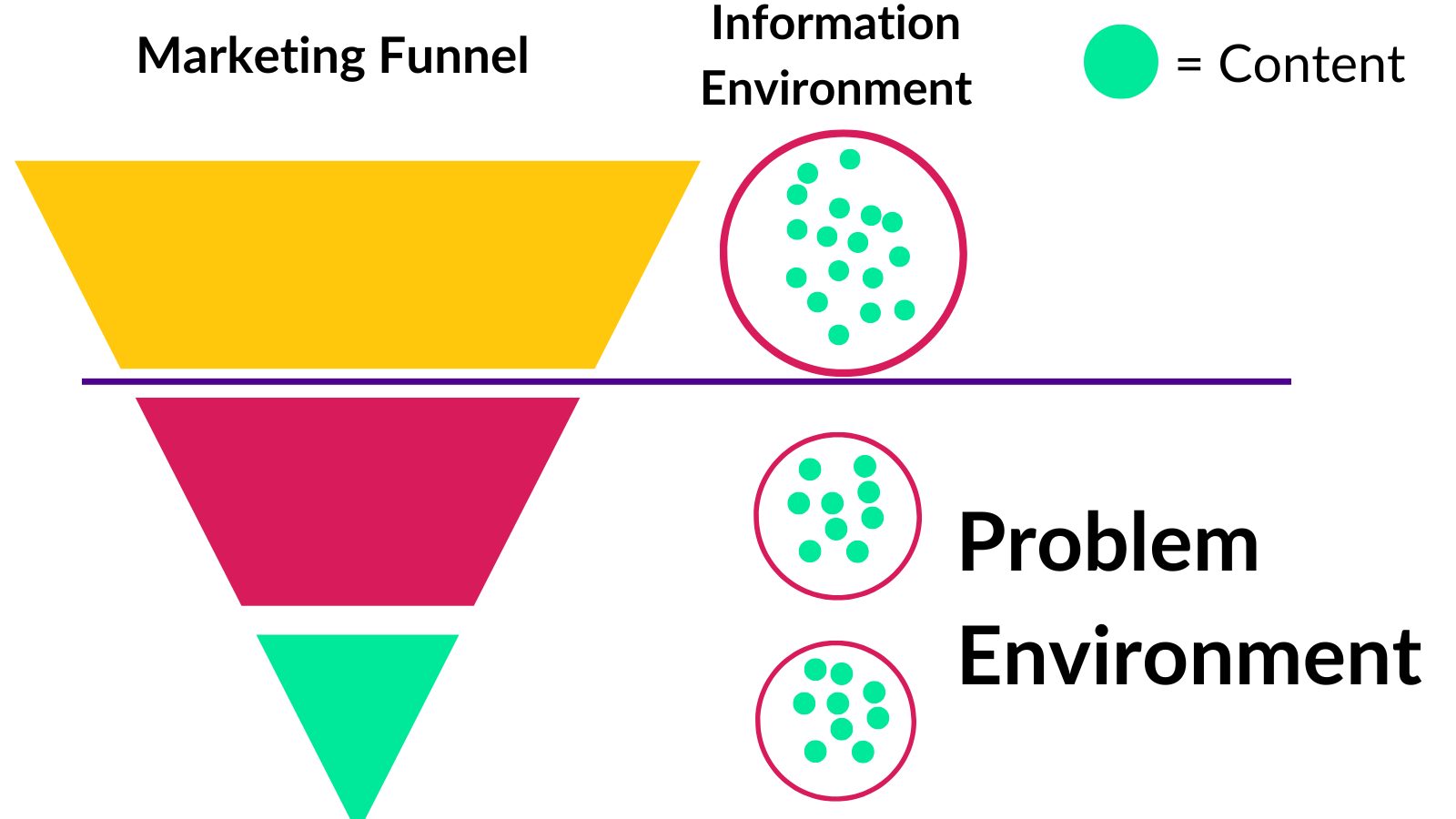
Humans are information carnivores, and we are always discovering information that helps us improve our lives and performance.
The same person looking for marketing information can also be looking for information on boxing.
This does not mean they are in the market to buy what you sell.
Humans need to move from the information environment to the problem environment in order to buy from you.
When that happens, the degree to which they recall your brand from your content interactions in the information environment matters.
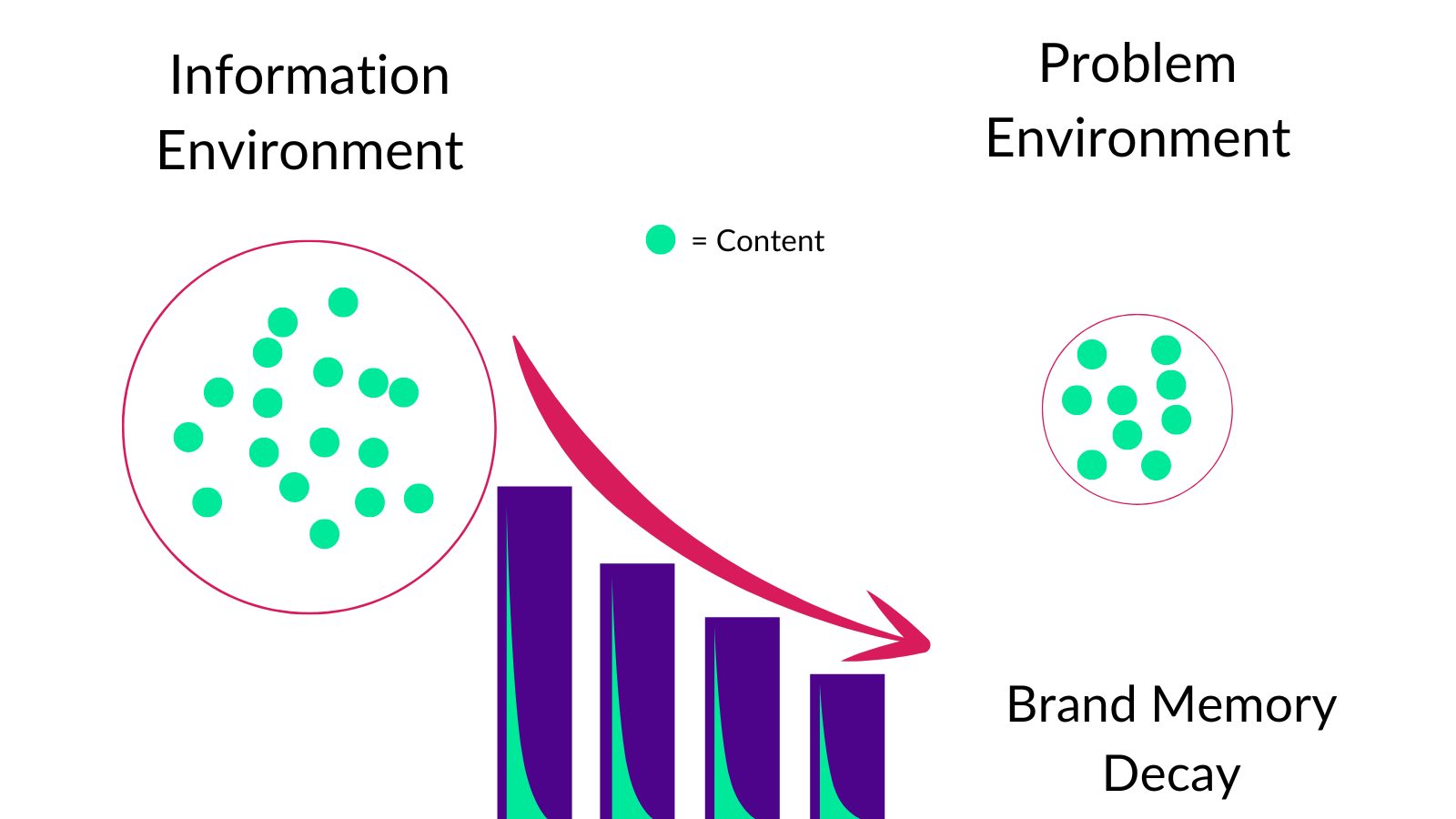
We know that recalling brands is a massive challenge due to the sheer volume of content we consume daily.
Most people can’t name 10 toothpaste brands, and you expect them to recall your brand based on an article they read three months ago.
Our minds are not built to carry this information, which is also known as the forgetting curve.
As Byron Sharp has said, “Our marketing and brand is ignored and forgotten by most people most days.”
This, again, causes a massive issue with attribution.
Someone who becomes a customer may have read your glossary a few weeks before entering your funnel, but that does not mean the glossary article helped the sale.
Therefore, we need to consider what kind of content would help with the sale.
And this is where PROBLEM AUTHORITY comes into play.
Buyers Search For Information Around Symptoms and Solutions
When consumers enter the market to buy, they enter the problem or task environment.
This means they have a start state and a solution state.
For example, I need a new bathroom tap, which must fit specific dimensions. As such, I need to find an almost identical one . And then I need to find someone to fit it.
Start state = I have a broken tap.
Solution state = I have a working tap.
Now that I’m in the problem environment, I’ll search for information that will help me solve that problem.
The first option is to find out how to fix the tap myself.
After that, I’m looking for people who sell and fit taps.
During this time, I’ll make a lot of searches, both informational and product-based, and end up in the messy middle of the search.
And it’s here that brands can indeed ‘win me’ because I have a problem that isn’t going away and needs solving.
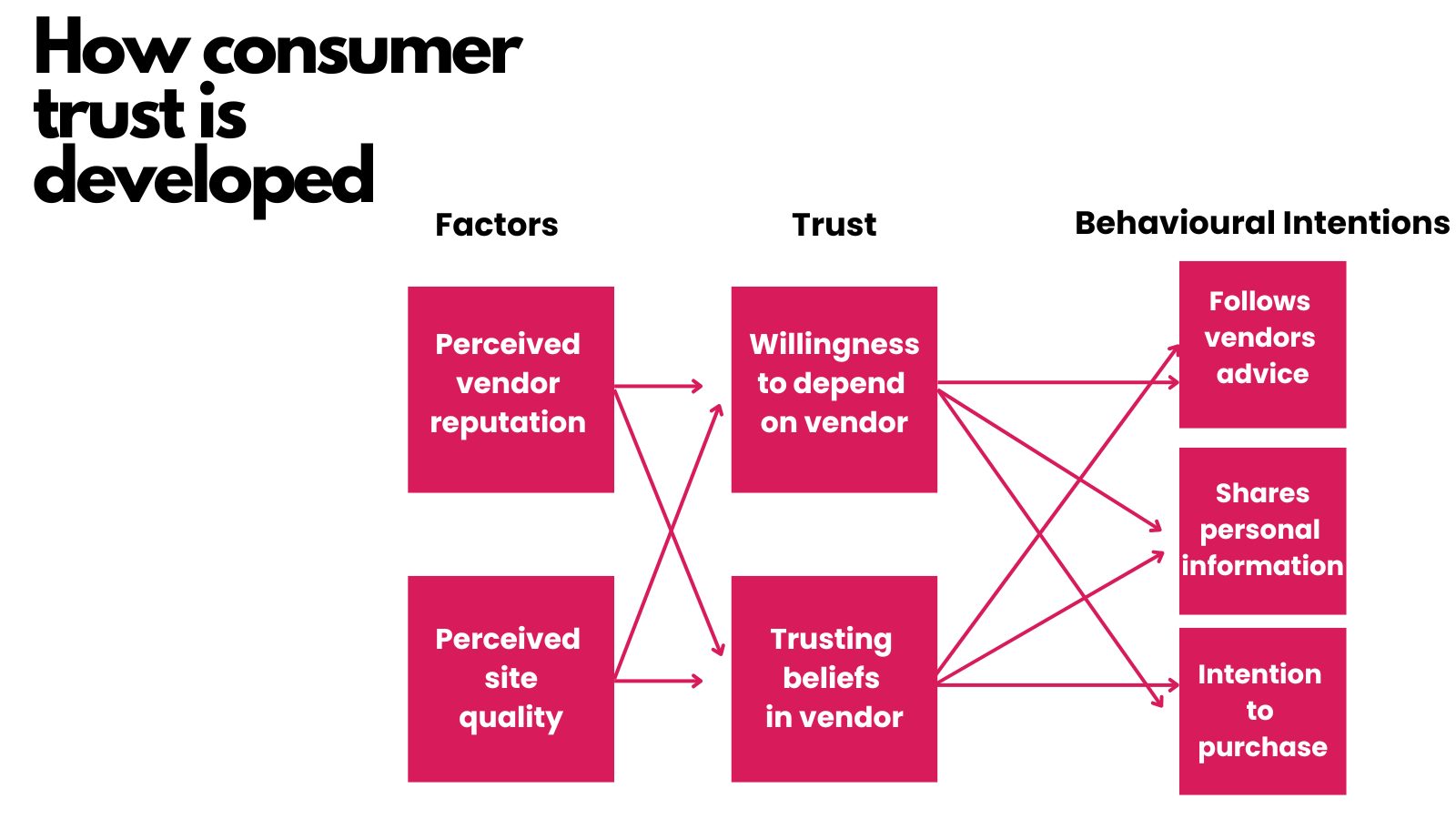
The above image is my version of one taken from the Mcknight study of how consumer trust is developed.
And as you can see, it makes sense.
As someone in the problem state finds websites, they look at the site quality and perceived vendor reputation.
This then turns into trust.
And trust leads to commercial action.
All of these can happen in seconds, weeks, or months.
The key aspect here is that because the information is based on a problem that I am actively trying to solve. I will retain information from vendors who supply me with helpful content related to that issue.
So, how can you start to focus on problem authority?
Push and Pull Content: The Key to Problem Authority
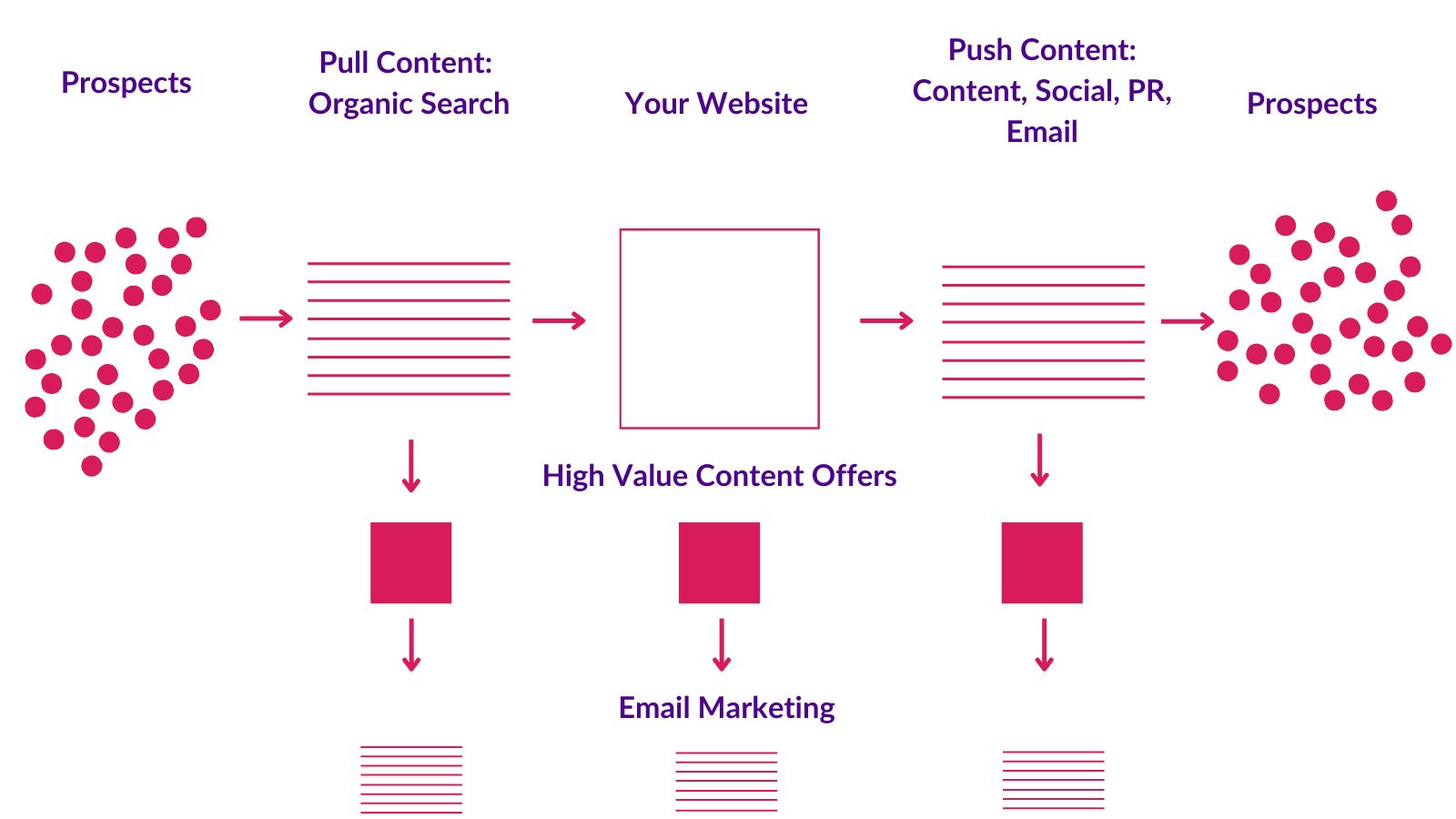
Over the years, I’ve suggested that brands adopt a push-and-pull strategy around their content.
You want content that pulls your prospects to your website (through SEO).
You want to create content that you push out to consumers via social media, email, and PR.
This simple system allows a brand to focus on the highly specific problem it solves and not be confined by organic search demand.
It will also help you grow your off-site authority and revenue while aligning your marketing teams under one goal: to tell people who have the problem you solve, that your brand exists and is ready to solve that problem for them.
This is the act of building signposts to prospects and connecting them with your brand.
So, how much organic search traffic can you get?
The classic answer is…it depends.
In some categories, a lot of content can be created to target keywords; in others, less so.
In some categories, you best go to people with social media content on TikTok.
In others, you might be best with LinkedIn posts, webinars, podcasts, events and the like.
Content strategy will help you to figure out the details for your brand.
However, finding 1000 ways to talk about the problem you solve is a lot easier and more beneficial than publishing content on broadly related topics related to your business.
Focus on problem authority, and you’ll soon see the results in your revenue.
Andrew Holland
Originally published on LinkedIn on 7 April 2025.