
There’s a strange thing happening in the SEO industry right now. For a discipline that prides itself on data and analysis, many SEOs appear to have lost the ability to think critically about what content is actually for.
Scroll through LinkedIn or X and you will see the same conversation repeated endlessly.
Content. More content. Helpful content. AI citations.
Visibility inside language models. A constant stream of tactical chatter about producing and measuring content.
But almost nobody seems to ask the most basic marketing question.
Why are we creating this content in the first place?
For more than a decade, the SEO industry convinced itself that content production was the strategy. If you created enough articles, built enough topic clusters and targeted enough informational keywords, success would inevitably follow.
Now AI is forcing a rather uncomfortable realisation.
Much of that thinking was flawed from the beginning.
The Library With No Books
To understand why content became such an obsession in SEO, you have to go back to the early internet.
Imagine walking into a library that had just opened in a small town. At first there are only twenty books on the shelves. Every time you return, more appear. New subjects are covered. New authors emerge. The library grows rapidly because there is almost nothing there yet.
That is exactly what the internet looked like twenty years ago.
Content worked brilliantly because there simply wasn’t much of it. If you wrote a clear article about a subject, you had a good chance of becoming one of the few available sources on that topic. Readers returned. Links accumulated. Brands gained recognition.
A lot of companies built their reputation this way. HubSpot is a classic example. The company produced thousands of articles about marketing and gradually became famous within that industry.
But there is an important detail that often gets overlooked.
Most of that content did not generate meaningful traffic. Even today, a huge percentage of web pages receive little or no search traffic at all.
The success of companies like HubSpot was not really an SEO success story. It was a content marketing success that built recognition over time.
Don’t take my word for it, look at the stats:
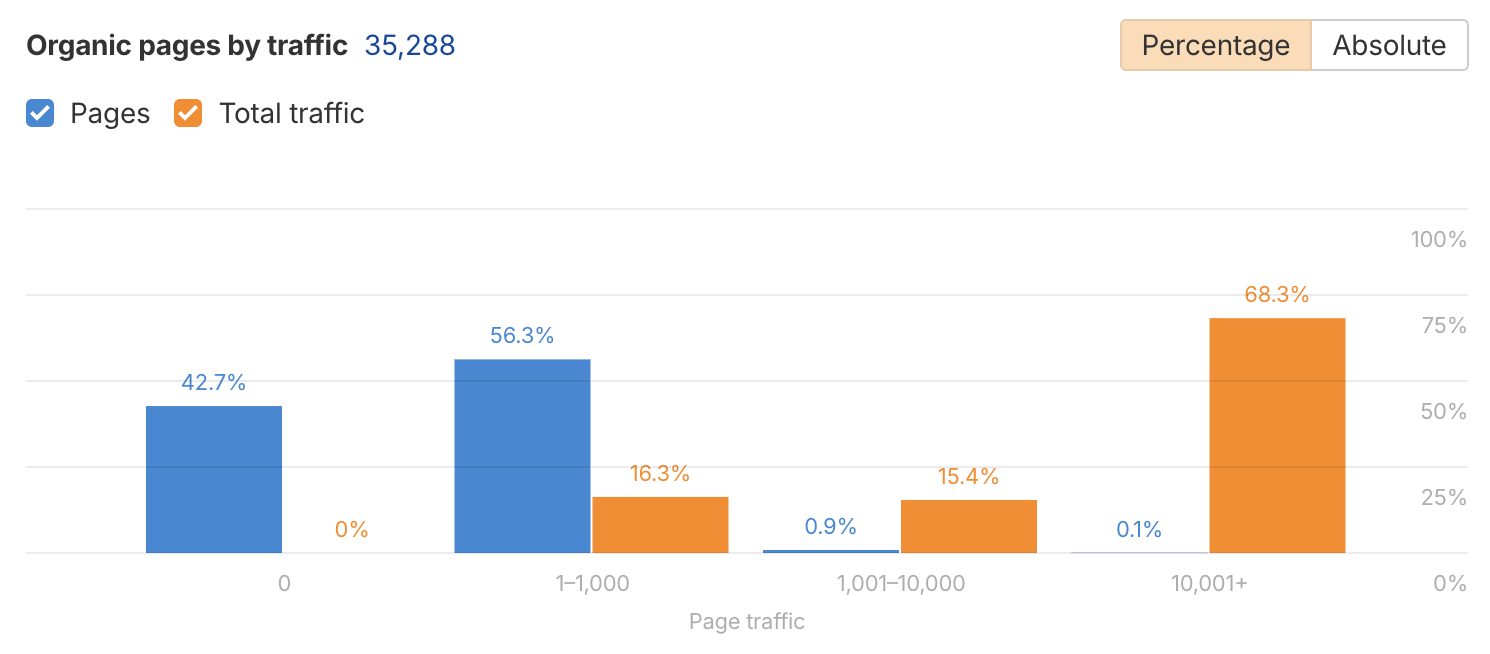
Out of Hubspots 35,288 pages 68% of their traffic comes from just 45 pages.
0.1% of their site produces 68% of traffic.
Need more evidence, what about Ahrefs?
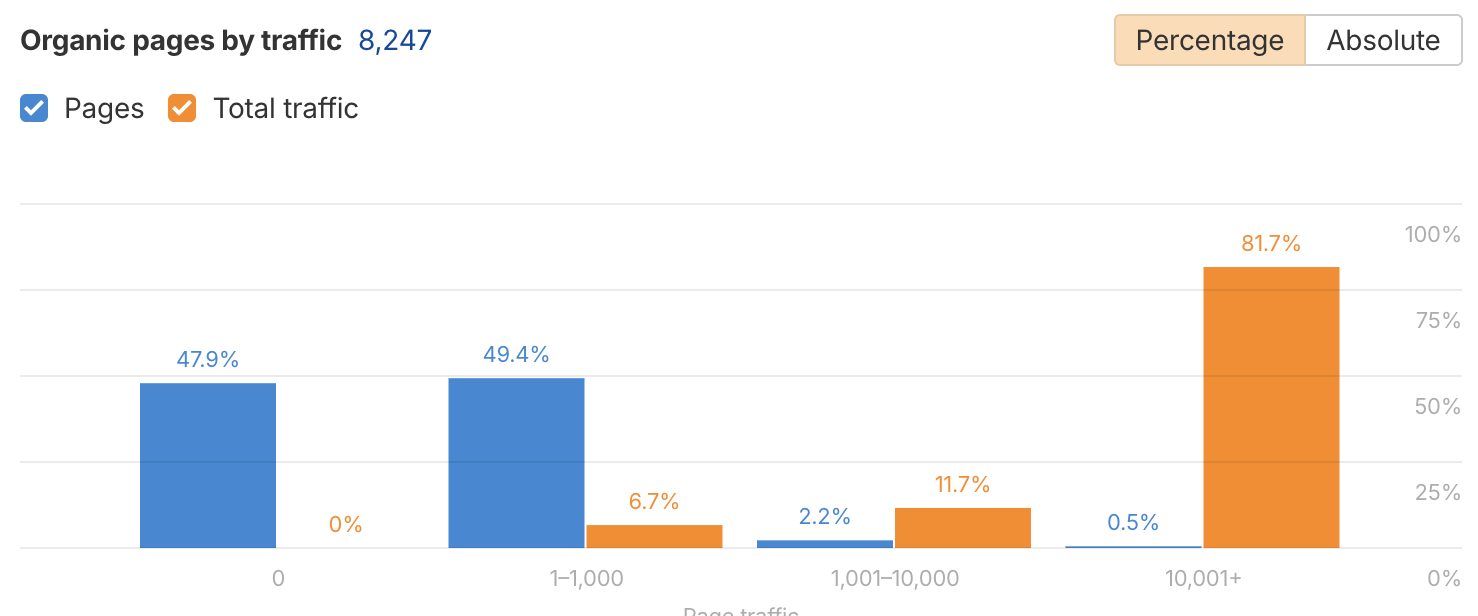
81% of their traffic comes from just 41 pages. That’s 0.5% of their site.
And what about a platform like Kajabi?
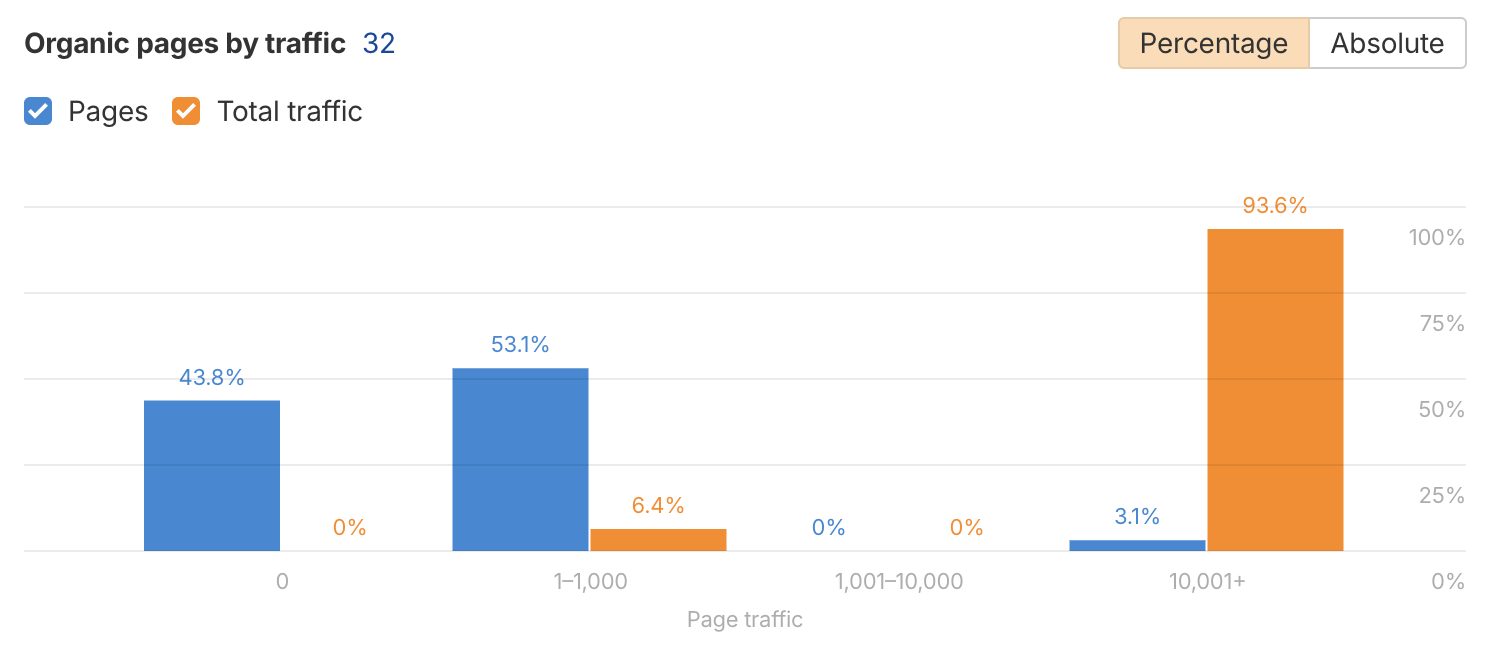
93% of their traffic comes from just 1 page.
This is the myth of content created for SEO.
And AI citation is even worse. Ahrefs places it’s A I citation at under 3000 for ChatGPT and AI Overviews.
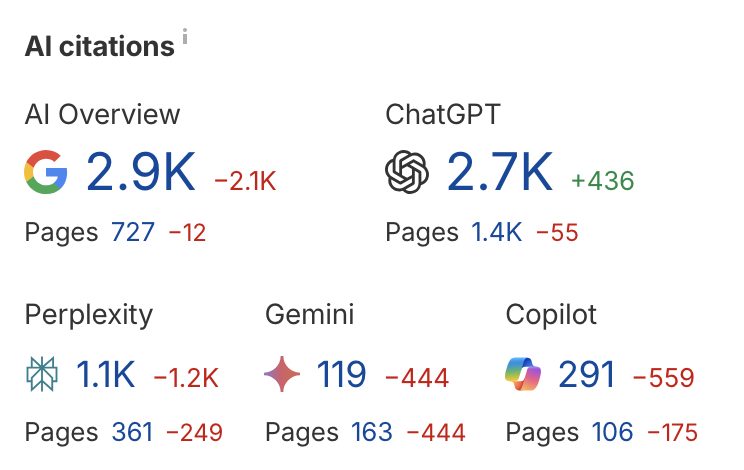
The informational game of SEO content is cooked.
As are the careers of those pushing this model, but let’s break this down further.
Or as the saying goes, let’s agitate the problem even more, and then we’ll provide the solution.
The Internet Is Saturated
Today, almost every informational topic has been written about many times.
Users behave accordingly.
Someone searches for a topic, opens an article and begins scanning it immediately. They skim paragraphs, pull out the useful information and leave. If they need more context they open another article.
Rarely do they read the entire piece. Rarely do they remember the brand behind it.
In many cases they barely even notice where they are.
For years most websites didn’t even have sticky headers or navigation that followed readers down the page. Once someone started scrolling, the logo disappeared. The user simply skimmed the content, completed their task and moved on.
The brand exposure was minimal.
Content functioned as a brief advertising signal at best.
Now AI is removing even that.
Large language models synthesise information from many sources and present it instantly in a single answer. The user no longer needs to visit multiple pages to assemble the information themselves.
The informational content model that powered SEO for years is slowly being squeezed.
Both logically and financially.
But some are still throwing an elephant in the room.
The Topical Authority Illusion
This is where the idea of topical authority entered the industry.
The concept sounded persuasive. If you created a dense network of articles around a subject, search engines would recognise your site as the authority and reward it with higher rankings.
There is a small element of truth here. Publishing consistently about a subject does reinforce relevance.
But the way the concept was sold was deeply misleading.
Agencies began promising authority through volume. Dozens of articles. Hundreds of articles. Complex topic clusters and semantic maps designed to signal expertise.
In reality, most businesses do not need an elaborate publishing system to demonstrate expertise.
A company selling mobile phones should naturally talk about mobile phones. A HR software company should talk about HR problems. Authority grows naturally when businesses communicate about the subjects they genuinely understand.
The deeper issue is that content production became detached from marketing purpose.
Articles were created because they matched keywords, not because they helped the business achieve anything meaningful.
Traffic became the metric. When traffic declined, the metric changed to something else. Recently that something else has been AI citation visibility.
The logic remained exactly the same.
Produce content. Measure exposure. Assume success.
The Economics of Content No One Talks About
There is another problem with the traditional SEO content model that rarely gets discussed.
The economics.
For years, agencies sold content through retainers. Two blog posts per month. Maybe four if the budget was larger. The promise was that consistent publishing would gradually build search traffic.
But very few people stopped to ask whether the economics actually made sense.
Consider a typical SEO retainer of around £2,000 per month. That might deliver two pieces of content. Over a year that becomes twenty‑four articles. After two years, forty‑eight.
It sounds substantial until you consider the scale required to build real visibility.
Imagine a startup building an app that helps disabled travellers navigate train journeys. The app helps people book assistance, organise taxis and find accessible routes through train stations.
A sensible content strategy might involve publishing accessibility guides for train stations across the UK. That content would genuinely help the audience the business serves.
But there are roughly 2,500 train stations in the UK.
At two articles per month it would take more than a century to cover them all.
Even accelerating production quickly becomes expensive. Creating detailed accessibility guides with images, transport notes and travel advice could easily consume tens or even hundreds of thousands of pounds.
And now AI can synthesise much of that information anyway.
That does not mean creating the content is pointless. Accessibility guides could still be extremely useful to travellers and valuable across social media communities.
But relying on informational SEO to distribute that content becomes economically questionable.
If content is essentially advertising, the question becomes unavoidable.
Is spending £24,000 to £100,000 on informational blog posts the best way to build fame for a brand?
Often, the answer is no.
That same budget could fund targeted advertising, partnerships, sponsorships or PR campaigns that reach far larger audiences.
The weakness of informational SEO was always distribution.
Content sitting quietly on a blog rarely reaches enough people to build meaningful brand awareness.
Cheap Content vs Valuable Content
Ironically, AI now makes part of the equation easier.
Basic informational content is incredibly cheap to create. Anyone can use AI tools to produce competent explanations of common topics. With human oversight and editing, the cost of producing that type of content has dropped dramatically.
That is not a bad thing.
Businesses should absolutely produce helpful resources for their audience when it is inexpensive to do so. Useful content builds credibility and supports internal linking across the site.
But the content that actually builds fame is rarely cheap.
Original research, data studies and expert commentary require effort. They involve collecting information, analysing it and presenting it in ways that journalists and audiences care about.
This is the type of content that earns attention.
A strong study about accessibility across the UK rail network, for example, might generate coverage across transport publications, national newspapers and social media communities.
One piece of research could reach hundreds of thousands of people through media distribution.
That outcome is very different from quietly publishing dozens of blog posts on your own website.
Cheap content has its place. But impactful content often requires investment.
What Content Was Always Meant to Do
If we step away from SEO terminology and think like marketers for a moment, the purpose of content becomes much clearer.
Content has always functioned as advertising.
The idea was simple. Someone encountered your content while researching a problem. They read your explanation. They became slightly more familiar with your brand. When a buying situation appeared in the future, your brand had a marginally higher chance of being remembered.
That is classic brand building.
Content nudged the probability of purchase from perhaps one in a thousand to two in a thousand. Small shifts in mental availability that accumulate over time.
But that effect only happens when content contributes to three things: fame, feeling and fluency.
Fame means people know your brand exists. Feeling means they associate it with something useful or positive. Fluency means the brand becomes easier to recall when a relevant problem appears.
Seen through that lens, the traditional SEO content machine begins to look rather inefficient.
Publishing endless informational articles on your own site rarely creates enough reach to build fame at scale.
And now that AI summarises much of that information instantly, the opportunity for exposure becomes even smaller.
The Three Jobs Content Must Do in the Age of AI
Content still matters. But its purpose needs to be clearer.
Today, content has three primary jobs.
1. Build Fame, Feeling and Fluency
Content should make your brand more recognisable and more useful to the audience you serve.
That does not mean writing endless blog posts on your own site. It means producing content that actually reaches people.
Videos, explainers, guides, interviews, podcasts and creator collaborations all contribute to this goal.
Returning to the train accessibility example, the company might publish travel advice for disabled passengers, explain common accessibility barriers or share guides for navigating major stations.
Some of that content might live on the website. But it should also appear on YouTube, social platforms and community groups where the audience already spends time.
Content should travel.
The goal is exposure to people who may one day need the product.
2. Become the Source of Information
The second job of content is authority.
Businesses that create useful data, research or expert insights often become the sources journalists rely on when explaining complex issues.
When your organisation becomes the source of information, media coverage follows.
That coverage generates brand mentions, backlinks and contextual associations across the web. It reaches audiences far beyond your own website.
This is essentially what digital PR achieves when it works well.
A single strong piece of research can reach thousands of readers through publications, newsletters and discovery feeds.
The reach achieved through media coverage can dwarf what most blogs achieve on their own.
3. Support Buyer‑Intent Pages
The final job of content sits much closer to traditional SEO.
When someone actively searches for a product or solution, your site needs pages that clearly explain why your offering is the right choice.
These are the buyer‑intent pages: product pages, service pages and comparison pages.
This is where revenue is captured.
SEO remains extremely valuable here. Optimising page structure, headings, copy and internal linking ensures these pages appear prominently when people search with purchasing intent.
Informational content can support these pages by building topical context and internal links.
But the commercial pages themselves are where search demand becomes revenue.
What a Modern SEO, Content and PR Retainer Should Actually Look Like
If the purpose of marketing is revenue, then the structure of SEO and content work needs to reflect that reality.
Too often, retainers are built around deliverables rather than outcomes. A fixed number of blog posts. A content calendar. A keyword roadmap.
These activities produce work, but they do not necessarily produce growth.
The goal is not content production.
The goal is revenue.
Revenue ultimately comes from a brand being known, trusted, remembered and easily found when a buying situation occurs.
That buying situation can happen in several ways.
Someone might think of the brand directly because it has become familiar. Someone might encounter the brand in media coverage. Someone might be recommended the brand by AI when researching solutions. Someone might search for a product and discover the brand on the results page.
All of these pathways matter.
A modern marketing structure, therefore, needs to cover three layers of growth.
Fame
Content marketing builds familiarity with the audience. It helps people understand the problems the brand solves and ensures the brand becomes recognised within its category.
Authority
PR and distribution amplify the brand through media coverage, expert commentary and research. This creates brand mentions, links and credibility across the web.
Revenue
SEO ensures the brand is visible when people actively search for solutions. Buyer‑intent pages must be strong enough to rank well and persuasive enough to convert.
Together, these three layers ensure the brand is visible in every meaningful buying situation.
A potential customer might hear about the brand through media coverage. They might encounter helpful content shared online. They might be recommended the brand by AI. Or they might discover it through search.
Each pathway reinforces the others.
Fame increases the chance of being remembered. Authority increases the chance of being recommended. SEO increases the chance of being found.
And when those three forces combine, the probability of purchase increases.
The Humbling Lesson
For many years the SEO industry treated content as a mechanical process.
Choose keywords. Produce articles. Wait for traffic.
But marketing has never been that simple.
Content is not a ranking trick or a traffic machine. It is a communication channel that helps brands become known, understood and remembered.
In the early days of the internet, communication benefited from an empty library with very few books on the shelves.
Today, the library is full, and AI is summarising many of the books before anyone even opens them.
The fundamentals, however, remain the same.
Brands grow when they are famous, trusted and easy to recall.
Content that contributes to those outcomes will always matter.
Everything else was simply filling the shelves.
SEO’s it’s time to move on from the content game.
Let the writers, write.
Let the PR’s, PR.
You need to focus on the bottom of the funnel.
That’s where the money is.
It always was.
Andrew Holland
Originally published on LinkedIn on 11 March 2026.