
The SEO industry is having one of its regular existential meltdowns. The kind where everyone suddenly agrees the old rules are dead, nobody agrees what replaces them, and a fresh pile of jargon is wheeled in to keep retainers alive for another year.
This time, the culprit is AI.
Depending on which LinkedIn post you last scrolled past, SEO is either dead, reborn, renamed, or “just the same thing really.” We’ve got AI SEO, GEO, AI search, AI rankings, AI visibility, share of search, share of voice, share of vibes, and a whole lot of very loud people insisting none of this changes anything.
They’re all missing the point.
This is not a naming problem. It’s not even a technology problem. It’s a strategy problem. And the reason so many people are getting it wrong is because they’re still thinking about AI like it’s Google with a different interface.
It isn’t.
AI is not a search engine. It’s an influencer. And until your strategy reflects that, you’re just repainting the same broken business model.
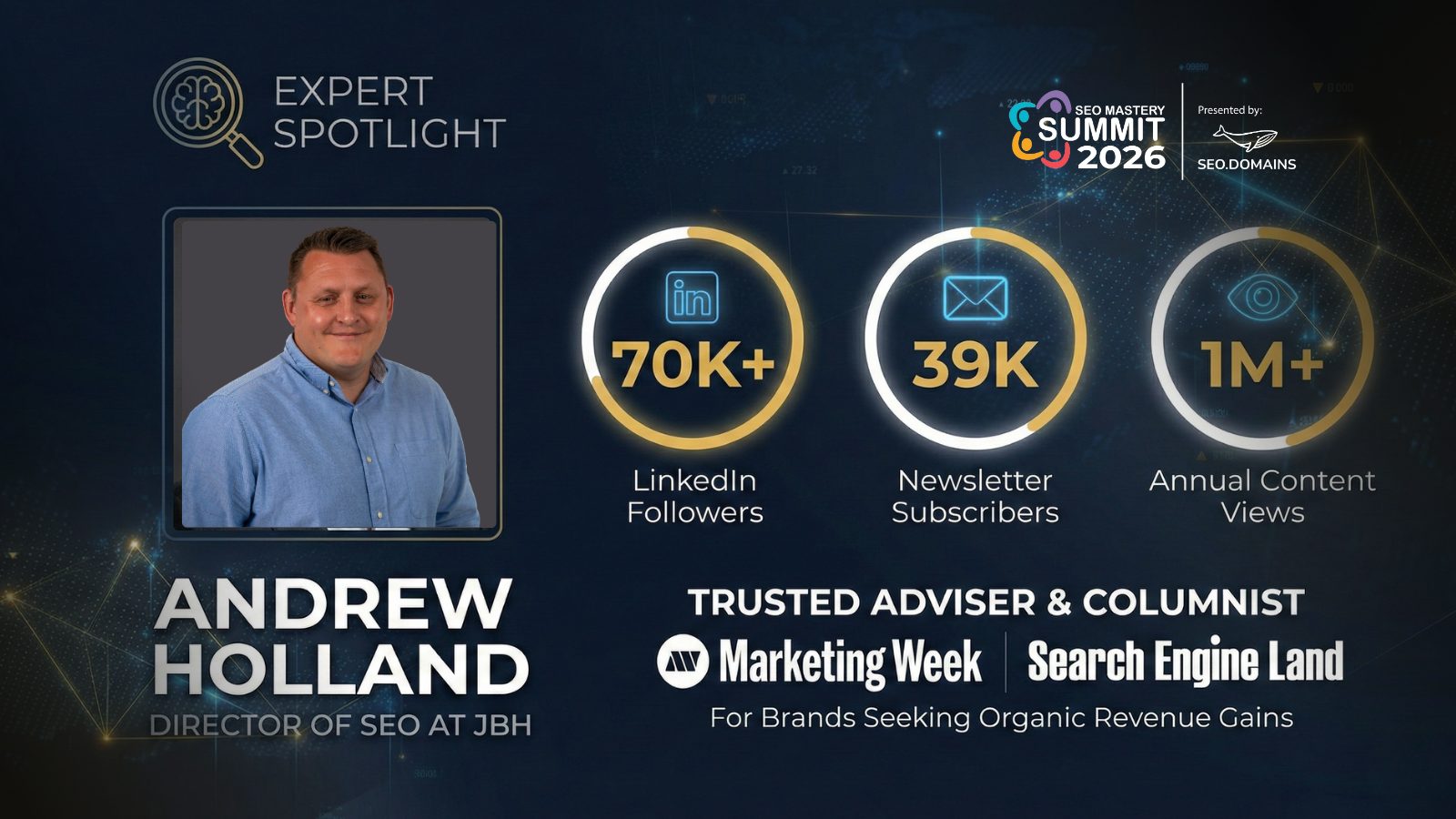
Side note: I’m speaking at Mads Singers amazing event SEO Mastery Summit in March. Grab your tickets as I’ll be delivering my best talk yet.
The SEO Industry’s Dirty Little Secret
To understand why this has gone so badly wrong, we need to be honest about what SEO actually became over the last 20 years.
In theory, SEO rested on three pillars: technical, content, and links. In practice, it rested on something far simpler: sellable deliverables.
Agencies didn’t sell outcomes. They sold things. Blog posts. Landing pages. Audits. Link packages.
Content, in particular, became the golden goose. It was scalable, controllable, and enormously profitable. Writers were cheap. Articles were expensive. And traffic became the perfect fig-leaf metric to justify it all.
Did the traffic convert? Maybe. Did it matter? Not really.
Traffic was the number you could point at while everyone quietly avoided the question of commercial impact.
Links were annoying, unpredictable, and often outsourced. Tech SEO became a specialism for people who liked fixing things. But content? Content paid the bills. And so the industry trained itself to believe that more content = more success, provided traffic went up.
Then Google started answering the questions itself.
The clicks dried up. The old metric collapsed. And the industry panicked.
Enter: AI Visibility (A.K.A. Traffic in a New Hat)
When traffic stopped working, SEO didn’t suddenly discover strategy. It did what it always does. It invented a new metric:
AI visibility.
How often are you cited in AI overviews? How often do you appear in ChatGPT answers? How visible are you across large language models?
On the surface, it sounds reasonable. Of course, you want to understand how AI represents your brand. But the moment “visibility” became a target, it stopped being useful.
That’s not opinion. That’s Goodhart’s Law.
Traffic worked until it became the thing everyone optimised for. Then it got gamed, inflated, and divorced from reality. AI visibility is already heading down exactly the same path.
Prompt-mirroring tools are the perfect example. Take a blog post you already have, reverse-engineer a prompt that mirrors it, feed it into an LLM, and ask: “Do we show up?”
Congratulations. You’ve just looked in the fridge to see if the light is on.
This isn’t insight. And worse, it encourages the same old behaviour: create more blog content, chase more citations, call it progress.
Meanwhile, the business still wants leads and sales.
Visibility Is Passive. Recommendation Is Decisive.
Businesses do not need to be visible in AI. They need to be recommended by AI.
Those two things are not the same.
Visibility is passive. Recommendation happens in buying situations.
And buying situations are the only moments that matter.
Nobody cares if your blog post is cited in an AI answer about “the history of keyword research.” They care whether your product or service is suggested when someone asks:
“What’s the best X for Y?”
“Which provider should I use for this problem?”
“What are my options here?”
That’s the fork in the road.
If your AI strategy is built around citations, impressions, or generic presence, you are optimising for noise. If it’s built around being recommended when money is about to change hands, you’re finally doing strategy.
AI Is an Influencer, Not a Ranking System
Part of the confusion comes from forcing old mental models onto new systems.
AI does not rank websites. AI does not crawl the web like Google. AI does not “decide” the best thing in the way humans imagine.
It synthesises information. It weighs reputation. It looks for certainty.
That makes it far closer to an influencer than a search engine.
Influencers don’t evaluate performance objectively. They recommend what they’ve heard of, what others talk about, what appears credible, and what feels safe to suggest.
Large language models do exactly the same thing.
Which means the core strategic question becomes brutally simple:
What do you want to be recommended for, and why should the model feel confident recommending you?
Problem-Based Strategy Beats Keyword-Based Thinking
Keyword research assumes people search in broad, clumsy ways. Humans do. AI doesn’t. It resolves problems precisely and then looks for solutions.
So the new equivalent of keyword research is problem research.
What problems do your customers actually have?
In what situations do those problems appear?
Why are you genuinely better than alternatives?
That’s positioning.
AI understands this naturally because it doesn’t think in keywords. It thinks in situations.
Your job is to make those situations explicit.
Content’s New Job: Shaping the Narrative
So, where does content fit in all this, if blog SEO is dead?
Content now does 4 things:
Build familiarity
Build fluency
Build positive feelings towards your brand
Shape opinion
It’s advertising, not bait.
But shaping opinion is worth looking at more deeply.
Opinionated content matters because AI does not have opinions of its own. It synthesises what exists. If nobody has written about something, the first credible piece often becomes the default answer.
That’s powerful. And yes, it can be abused.
But the strategic use of opinion content isn’t to chase prompts. It’s to ensure that when AI assembles a view of your category, your voice, your framing, and your evidence are part of it.
Buyer’s guides. Comparisons. Case studies. Industry news, product opinions. If something can be written about your industry, category, product or service that will alter buying behaviours, you should have written it already.
Not to rank. Not to get clicks. But to try to shape what gets said by AI. To have your ‘say’ about your own category. To have ‘skin’ in the game.
Letting others shape the AI narrative for your industry, products, or services is not a good plan. Even if you agree with what AI synthesises about your industry or brand. You should be throwing your ‘2 pennies’ worth into that mix.
A good rule of thumb over this is to look at what you want others to say about your brand and ‘say it first’.
This is, of course, basic brand comms, not SEO. But as I’ve said, AI is an ‘always on’ influencer. You need to try to influence the influencer.
And sure, in some cases, your influence will be enough. But mostly, it’s third-party influence that matters.
Reputation Is the Real Ranking Factor
When AI is asked to judge “the best,” it can’t measure performance. It synthesises reputation signals.
Those signals are what’s known as mutual information: overlapping, corroborated information across multiple sources.
Your website. Reviews. Third-party lists. Industry mentions. Location data. Consistent descriptions of what you do and who you serve.
The more competitive the category, the more signals you need. The less competitive, the fewer.
This is not optimisation. This is digital reputation building.
And unlike content calendars and link packages, it never ends.
The Uncomfortable Conclusion
If your AI strategy does not connect to recommendations in buying situations, it will not survive contact with a CFO.
Visibility dashboards will look impressive. Reports will be produced. Metrics will trend upwards.
And then the contract will be cancelled.
Because eventually someone will ask the only question that matters:
“Is this driving revenue?”
AI hasn’t killed SEO (yet). But it has killed the illusion that tactics can substitute for strategy.
AI isn’t a search engine. It’s an influencer.
And until your strategy is built around being recommended (not merely being seen), you’re not adapting.
You’re just delaying the inevitable.
Andrew Holland
Originally published on LinkedIn on 19 January 2026.