
In this article, I’ll explain why digital PR is a must-do.
You’ll see a proven case study we have where we increased revenue with PR.
Data from the marketing sector on publicity’s impact.
And also the impact of SEO on revenue.
Let’s dive in.
The War in SEO
There’s a war going on in the SEO industry right now. And no, it’s not about whether the letter S is turning into a G. We’re past that argument.
The real fight is over ownership.
Who owns the future of visibility — the SEOs, the PRs, the copywriters, or the machines?
It’s a dangerous argument because, at the end of the day, it doesn’t matter who owns it. The only thing that matters is what works.
And what works right now, what’s actually driving visibility, revenue, and relevance, isn’t your technical SEO setup or your next batch of 200 keyword-stuffed articles.
It’s digital PR.
The illusion of SEO control
Yesterday, I read one of those SEO think-pieces. The kind that dresses up insecurity as insight.
The author claimed that ranking in Google is over; the new game is being “cited by AI.”
Apparently, the way to achieve this is by building “topical authority” through content volume, E-E-A-T signals, and endless blog production.
Let’s be clear: this is SEO theatre.
It’s SEOs trying to hold on to the illusion of control by pretending the future is still theirs to define, and that the answer, as always, is to buy more content.
I’ve seen this movie before.
It ends with clients paying for more blog posts that no one reads, rankings that don’t move revenue, and the agency insisting the strategy “just needs more time.”
As I say all the time, traffic is vanity, profit is sanity.
Which means we, as SEOs, need to start using skill sets that drive profit and growth.
Businesses come to SEO agencies because they want organic revenue growth, not because someone wants to chase keywords.
And PR is now in the driving seat for the future and the present.
Why? Because it grows revenue.
And I can prove it.
The uncomfortable truth: PR wins because people see your business
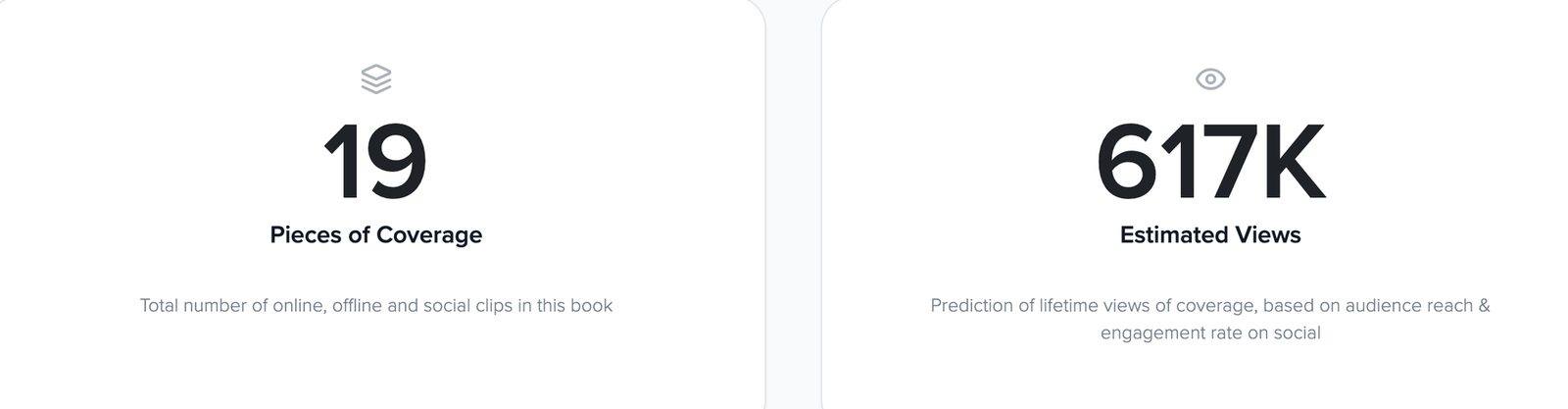
I’m a fan of content…real content. But what most SEOs are selling isn’t content; it’s inventory.
It’s filler text produced to hit a keyword quota, not to move a market.
Meanwhile, the brands that are actually winning visibility and revenue are those investing in digital PR, not as a vanity exercise, but as the fuel for every modern marketing engine: SEO, AI visibility, and brand fame.
Because here’s the thing.
When authoritative third-party publications talk about your brand, the impact multiplies:
You’re read by real humans.
You’re indexed and ingested by Google.
You’re fed into the training data of AI models.
You get links that humans can click through and visit your page.
You get links that search engines value.
That’s exposure, signal, and salience in one move.
Digital PR is what makes your brand discoverable by humans and machines alike.
So, how exactly does digital PR do all the above?
Media amplification is the new distribution model
Let’s talk about why this works.
When you earn coverage in a major publication, you’re not just borrowing their credibility; you’re borrowing their distribution system.
Publishers are incentivised by traffic.
Their social teams, their newsletters, their algorithmic feeds all exist to maximise readership. So when they feature your brand, they push it hard. They promote your story through their established channels to real, engaged audiences.
It’s the opposite of traditional SEO content, which sits idle on your own site hoping someone might stumble across it. A fact that thanks to AI is getting increasingly unlikely anyway.
Digital PR uses other people’s machines to do your marketing for you.
And that, in turn, signals to Google and AI models that your brand is active, relevant, and trusted.
It feeds the very ecosystems that will determine visibility in the next decade.
From optimisation to promotion
Here’s the bigger strategic point: SEO used to be about optimisation; tweaking tags, structuring data, making Google’s job easier.
But the game has changed. The future isn’t about optimising websites; it’s about promoting brands. You need to feed the machine with mentions, context, and credibility.
Digital PR does that elegantly. It generates signals of authority that algorithms can read and humans can feel.
Whether we call it SEO, GEO, or AI-SEO, the outcome is the same: brands that are talked about win.
And that requires a mindset shift from “build it and they will come” to “promote it so they can’t ignore you.”
Digital PR creates fame, feeling, and fluency
There’s a reason Byron Sharp and Binet & Field’s frameworks still hold water in 2025. Brands grow by achieving three psychological outcomes:
Fame: they are known.
Feeling: they are liked or respected.
Fluency: they are recognised and recalled.
Digital PR does all three simultaneously.
When a reader sees your brand quoted in the press, that’s fame.
When it’s expert commentary on a real-world issue, that’s feeling.
And when they later spot your product on a search result or supermarket shelf, that’s fluency.
It’s the classic long and short balance, building brand while triggering demand, but updated for the AI era.
The human factor
Now, a warning. The rise of AI in outreach has turned parts of digital PR into spam hell.
Lazy practitioners are automating pitch emails, flooding journalists’ inboxes with AI-written garbage, and wondering why they get ghosted.
Real PR is human. It’s about relationships, credibility, and timing. The PR pros know that. The SEOsdo not..
So, if you’re serious about visibility, let the PRs lead. Let them pitch stories, craft hooks, and build reputation. Don’t reduce PR to a link spreadsheet.
Because here’s the irony: when you stop chasing links, you start earning better ones.
Always-on visibility, not one-off campaigns
Digital PR isn’t a stunt. It’s a system.
The brands that win, and we’ve seen this repeatedly across JBH’s clientbase, are those that treat PR as an always-on engine.
They don’t “do” a campaign and go quiet.
They keep feeding the ecosystem with data, commentary, and stories that keep their brand visible.
The web is a fast-decaying organism. Mentions fade. Links die. News cycles move on.
If you’re not constantly refreshing your brand’s presence, you disappear.
It’s no different from advertising frequency. Out of sight, out of mind; and, soon, out of search.
Don’t believe me?
Here’s what the data says.
Why You Need to Fuel SEO With PR
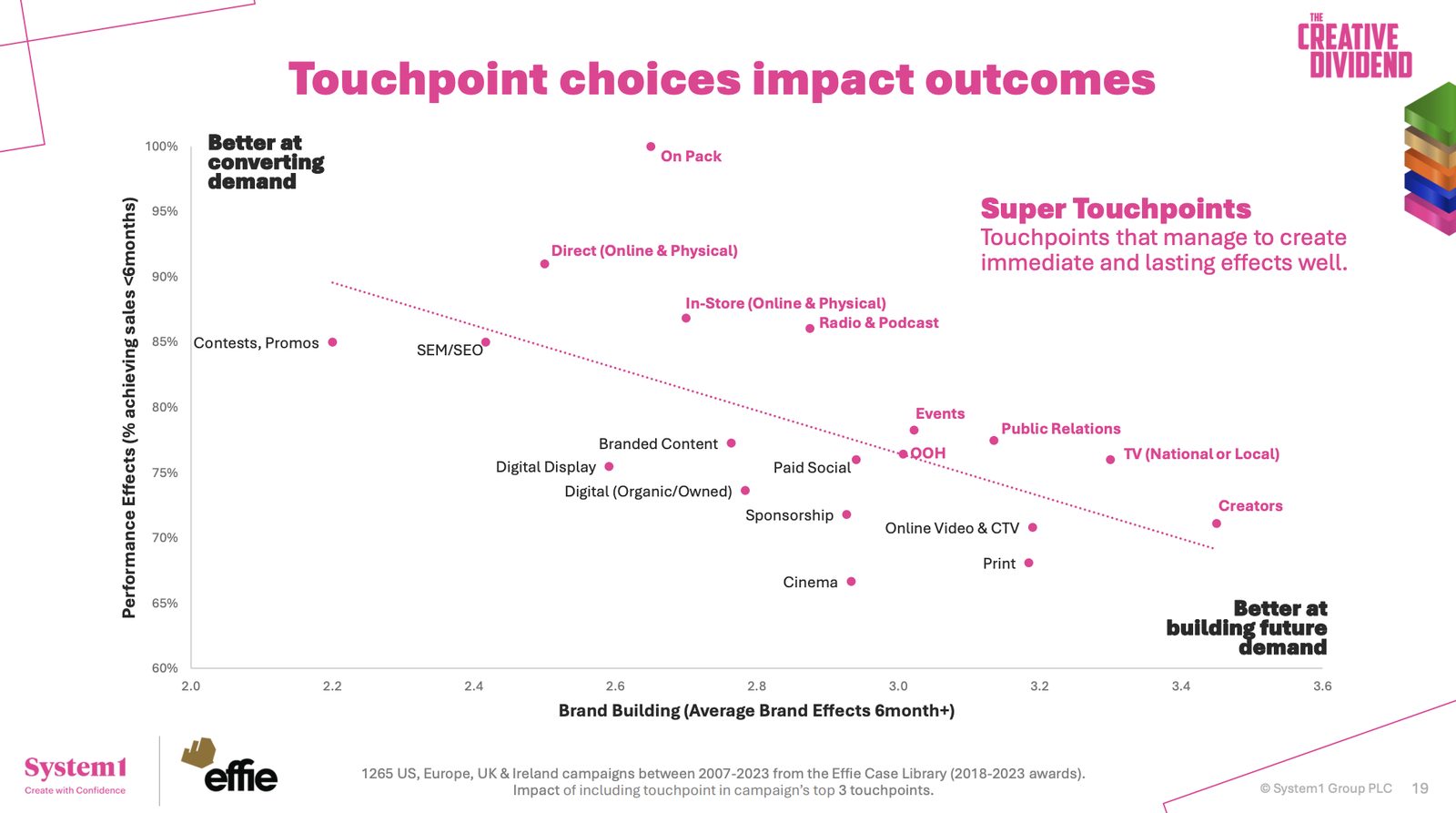
System 1, in collaboration with Effie, produced an incredible report which you can access via this link.
They measured what’s working in marketing across brands, and the findings were incredible.
Not only can you see for yourself (in the image above) that SEO is one of the top channels for converting demand.
You can see that public relations (PR) is one of the super touchpoints that create immediate and lasting effects as well.
In short, PR is a super touchpoint.
We’ve always known that SEO is incredibly powerful because, let’s face it, if you rank on page one for buyer-intent terms, you’re likely to convert lots of traffic and gain revenue.
But PR, as a vehicle to spread word about your brand and to build that fame, feeling and fluency, is among the top channels driving growth for brands
And because we know that digital PR feeds into the same systems that produce SEO performance, it’s a no-brainer to use PR to grow the fame of your brand while also growing your rankings.
Now, you can see in the System 1 case study that they are saying publicity drives revenue as well. That is something we have known for a long time.
We have numerous case studies on brands we have helped to grow their bottom line.
In particular, I am going to give you a case study now that shows the direct impact on sales and revenue of digital PR.
The Better.co.uk case: proof that PR drives profit
If you still think digital PR is fluffy, let’s talk about a hard-nosed, regulated sector: mortgages. Not exactly sexy. Not exactly viral.
When Better.co.uk, a digital-first mortgage platform, faced budget cuts, they made a bold move.
They cut 58% of their marketing spend and left digital PR as their only organic activity.
No massive ad spend. No keyword marathon. Just smart, performance-led PR designed to earn high-quality coverage and links to commercial pages.
The result?
60.3% revenue increase in six months.
23% ROI uplift.
Cost per lead down 90% year-on-year.
Cost per sign-up down 89%.
Those aren’t vanity metrics. Those are boardroom metrics.
Coverage in Forbes, Insurance Edge, and a slew of finance outlets drove both trust and traffic. It wasn’t about generic backlinks; it was about authoritative mentions in the right context. That exposure directly lifted key category pages and fuelled tangible revenue growth.
That is the model. That is the future.
And it absolutely tears apart the idea that digital PR is just “nice to have.” It is the difference between shrinking and growing when the economy turns to rubbish.
The thing is, when you combine SEO with Digital PR, you create one of the most effective channels for your business.
The future is owned by those who are talked about
So yes, you still need SEO. You still need technical hygiene, fast pages, and a decent website. But the strategic power now lies with digital PR.
Because it doesn’t just prop up rankings; it drives awareness, revenue, and survival in one go.
Better.co.uk proved it. Dozens of brands are proving it every day.
SEO optimises what exists. Digital PR creates the reason anyone cares.
And in the AI era, where algorithms answer before users even click, that difference is existential.
Digital PR isn’t a nice to have anymore. It’s survival. It’s revenue. Its relevance.
If your brand isn’t being talked about, it doesn’t exist.
So get mentioned, get seen, and for God’s sake, stop writing blog posts no one reads.
And as promised, please find a link below to the video where I spend an hour talking about GEO on the Odys Global podcast with Aneta Samkoff
The video is packed with information.
Check it out below.
https://youtu.be/JFPrwqnGZyk?si=hFSeiQtGviuGfChJ
Andrew Holland
Originally published on LinkedIn on 3 November 2025.