For the best part of two decades, the SEO industry has been fixated on a single word: links. And for the most part, it has had no bloody idea why.
Ask an SEO “expert” what a link is, and you will get the usual rubbish about “authority”, “PageRank”, and “link juice”.
It’s the verbal equivalent of empty calories.
They will tell you that links still matter, but only as one of 2000 signals in Google’s sacred algorithm, which they have apparently deciphered using a £29 monthly subscription and a few YouTube tutorials.
Here is the truth.
Links are not a technical trick or a ranking hack. They are the digital manifestation of market success.
Links are the most measurable, structural expression of something far more fundamental: fitness.
That is the evolutionary principle that explains why some brands grow naturally while others burn through budgets trying to fake it.
The irony is that the SEO industry stumbled upon one of the most profound laws of business success, only to bury it under a mountain of spreadsheets, outreach emails, and guest-posting drivel.
The science of links was never just about Google.
It’s about why things, products, ideas, people, and brands rise and keep rising.
It’s about preferential attachment, network dynamics, and the universal rule that success compounds for the fittest.
Twenty years on, most marketers are still busy trying to build links like Lego bricks rather than earning them through genuine market fit.
And in this article, I’ll explain links in a way that will blow your mind.
The Industry BS: From PageRank to Pointless Tactics
When Google launched PageRank, it changed everything.
The algorithm treated links like academic citations, each one a vote of confidence from one site to another. The more votes you had, and the higher the quality of those votes, the more visible you became.
It was elegant, empirical, and devastatingly effective.
And that elegant idea was instantly bastardised.
Within a few years, marketers had industrialised the process.
“Link-building” became an entire economy of fake fitness: buying, swapping, and spamming links en masse.
For twenty years, agencies have been selling authority the way medieval priests sold indulgences. Pay us, and we will absolve your ranking sins.
But what they all missed was the point.
Links were never just a ranking factor.
They were, and still are, the trace evidence of real-world reputation.
They map influence, attention, and fitness.
You see, the web is a network of signals, and every link is a synapse firing between two entities.
The tragedy is that an entire industry built its fortune on the surface-level mechanics, not the underlying science. SEO became obsessed with the plumbing and forgot the physics.
What PageRank hinted at, and what network science later proved, is that links are not random.
They follow patterns. They cluster, grow, and decay according to the fitness of the nodes they connect.
That fitness reflects the brand’s inherent value, its ability to attract attention, earn reputation, and endure.
And that is where things get properly interesting.
The Network Science: Fitness and Preferential Attachment
In 2002, scientist Albert-László Barabási published Linked, one of the most important books ever written about the structure of networks.
His discovery was simple but seismic.
The internet, and most complex systems, follow a power-law distribution.
A few nodes, websites, brands, or people attract the majority of connections while the rest fight over the scraps.
This phenomenon is called preferential attachment. Success breeds success. The Rich get richer.
The more links you have, the more likely you are to gain new ones.
But Barabási went further. He asked why certain nodes were able to attract more links than others, even when they started from zero.
His answer was fitness.
What is Fitness and Why it Matters
Fitness, in network terms, is an intrinsic quality.
It’s the hidden advantage that makes one entity more likely to attract links, attention, and growth than another.
In business terms, fitness is your brand’s inherent value: the quality of what you do, how well it is perceived, and how effectively that perception spreads.
Fitness is a brutally elegant model that, when paired with past success, equals future success.
And that’s Barabási’s equation on performance and success.
Future success = Fitness × Past success
And it’s the networks which decide success based on your ability to display fitness signals.
Or as Barabási’s third law puts it:
“When performance is measurable, performance drives success.
But when performance cannot be measured, networks drive success.”
Think about that for a second.
In markets where quality is opaque. Where no one can test your product before purchase. Reputation becomes the performance.
The network, the chatter, the links, and the mentions, that is the scoreboard.
And that is exactly what the JBH Link Mapping Tool visualises.
It shows a brand’s true fitness in its digital ecosystem.
The Art of Link Mapping
When I first came up with the idea of link mapping, if I’m honest, it was only to display links visually.
And what started as a bit of an idea has led down a rabbit warren around the science of links, some of which I’m sharing in this article.
So, let’s have a look at a few different brands’ link maps.
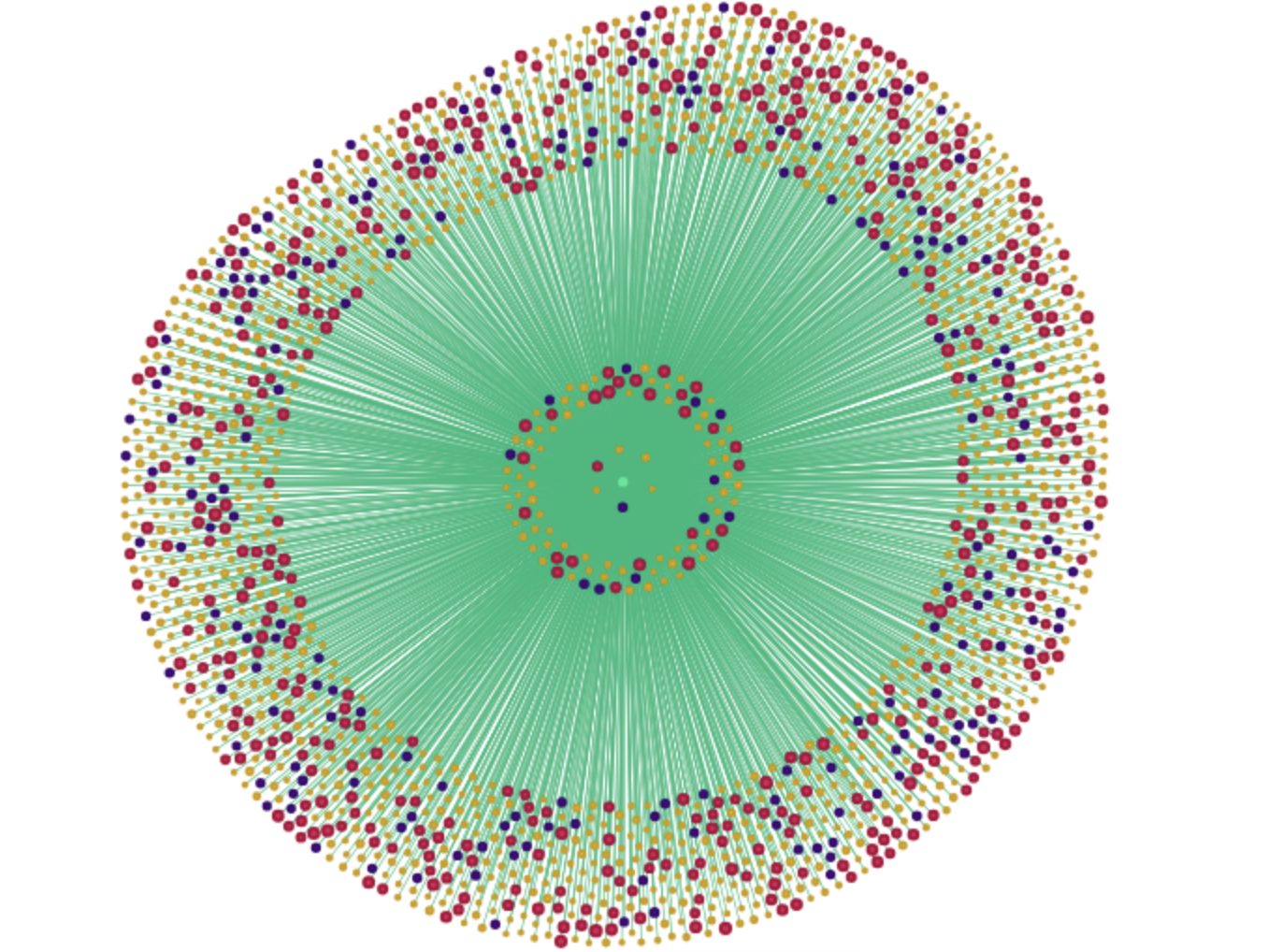
The above link map is the home page of a UK cinema chain.
Pink = high authority links, purple is medium, and yellow is low.
As you can see, the brand has some great links.
Let’s contrast this to my own LinkedIn Profile:
It’s a lot different…sparse, you might say.
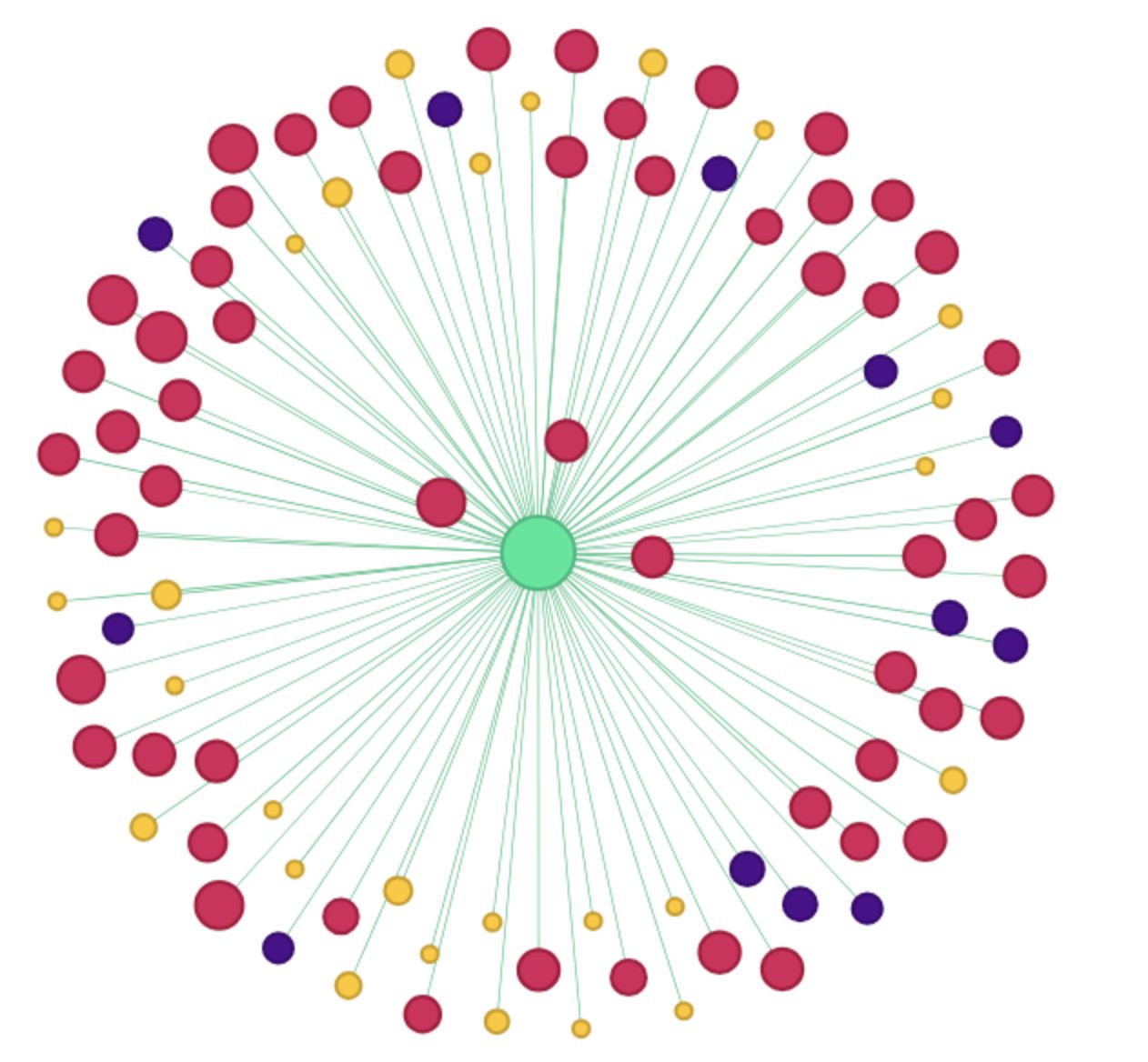
But let’s compare this with my friend and marketing genius Andy Crestodinas profile.
You can see that Andy has a vastly better link profile.
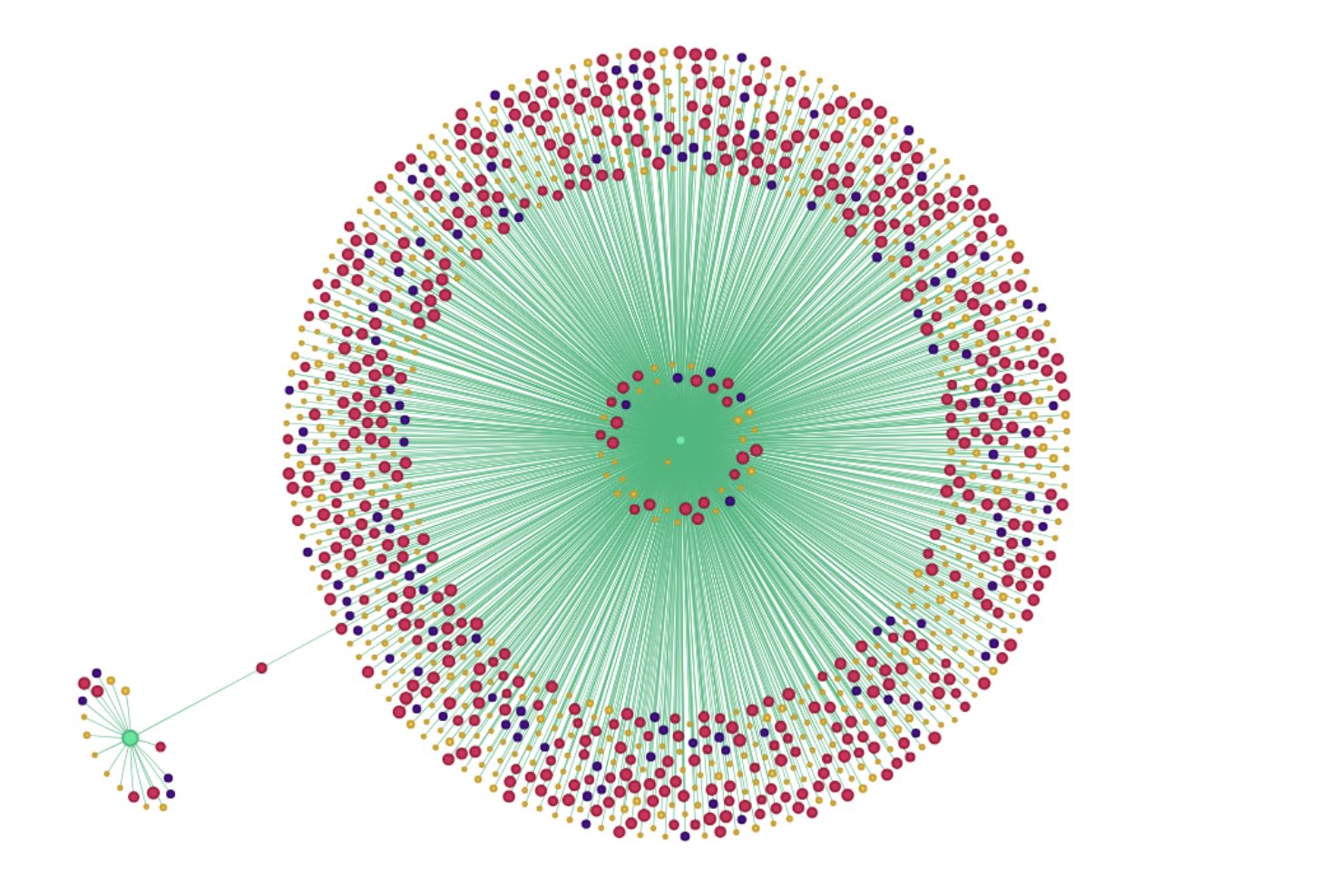
And that’s the way it should be. Andy C is more famous than Andy H.
Links are serving as a proxy for fame here, just like brand search/ share of search does.
But what about the total pages on websites?
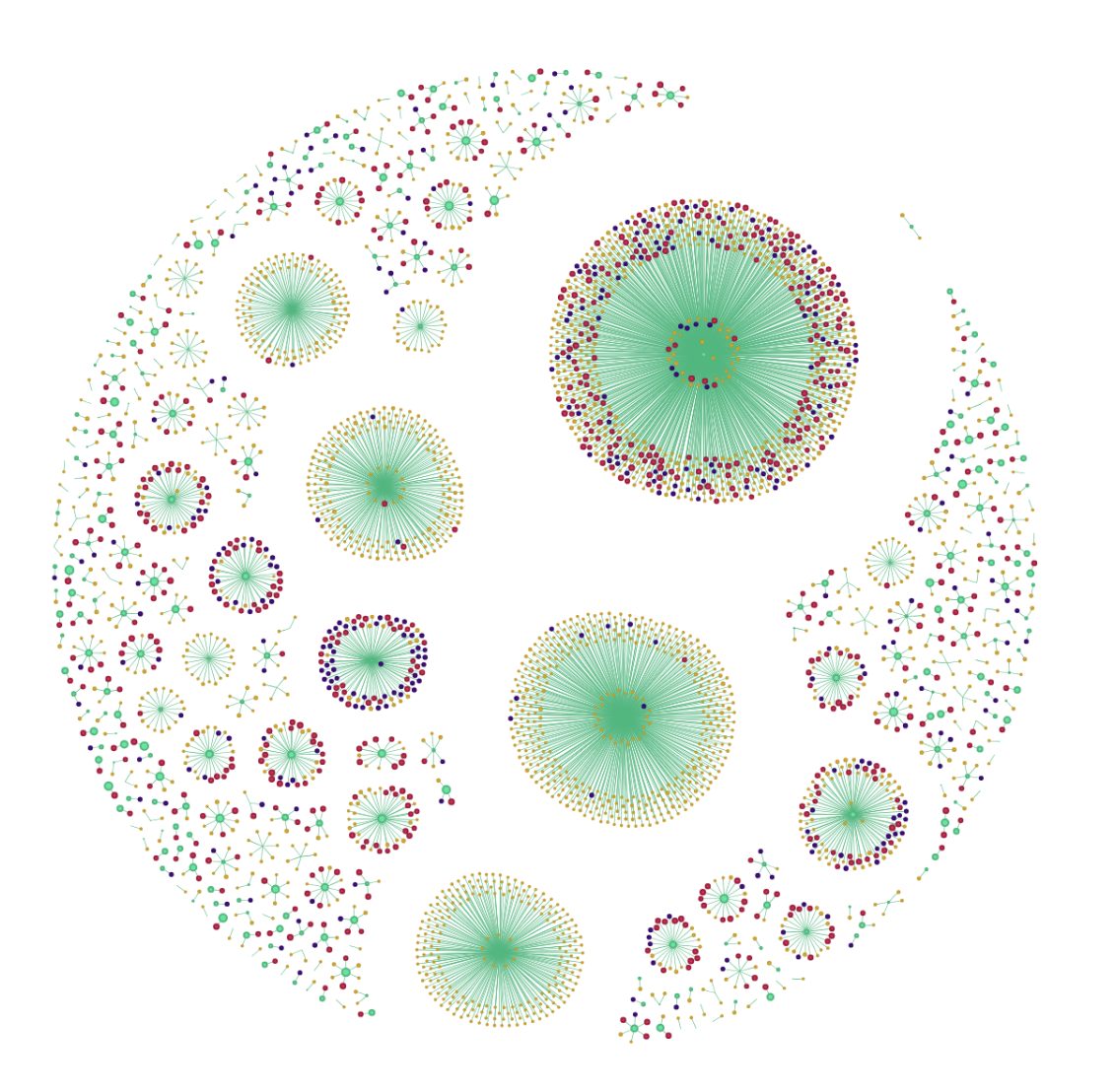
The above image is a multi-7-figure UK-based business that has a DR of 70.
Each node, each connection, and each hub tells the story of perceived quality and earned attention. A dense, diverse, healthy link profile means your brand is naturally fit. It earns attention without bribing for it.
A weak, sparse, or spammy link profile is the digital equivalent of a tumour. Fake growth without any vitality.
And yes, I can zoom into every node in seconds to manually check the page and links.
Link mapping, done properly, is not SEO diagnostics. It’s brand fitness analysis.
Links in the above examples serve as a proxy for brand fitness.
The problem is, there’s very little information on what you need to do so that your link profile grows naturally.
What are the best actions to take that lead to meaningful business brand growth?
So, let’s dive deeper.
The Mimetic Psychology: How Ideas, Brands, and Links Spread
Networks do not just link. They copy information. And that is where memetics enters the conversation.
Networks take information about people and brands, which then spreads online, and while yes, many unlinked mentions of people and brands happen.
As a result links increase with fame or infamy as a proxy. You might have 1000 mentions of your brand online, generating 30% of links.
Psychologist Susan Blackmore once described culture as a war of memes: stories, symbols, and ideas that replicate by being memorable.
They spread because they are catchy, not because they are true.
And this makes memetics an interesting place to focus, because if this is true, what moves the memetic needle?
Links = Brand and Business Fitness

Geoffrey Miller took Memetics further in Spent, he argued that ‘memes’ or cultural information was largely pushed down by marketing/ advertising and PR. And without this push-down, many things which are now popular wouldn’t be.
Of course, social media and virality play a part in this these days. You can accidentally become famous just because intrinsic qualities push this forward. There just happens to be something unusual about what you do that appeals to everybody.
But in the absence of this accidental fame, marketing itself is the thing that pushes memetics.
Miller argued that marketing itself is just a modern form of costly signalling, the peacock’s tail of capitalism.
A company’s PR, its advertising, and its content are not functional outputs. They are fitness displays.
Signals of intelligence, resources, and reliability designed to attract attention and trust.
Every campaign, every piece of earned media, every digital PR placement is a signal flare saying, “Look how fit we are.”
This is where links become evolutionary artefacts.They are memetic fossils that record how far and wide your brand’s ideas have spread.
When people talk about your business, reference your data, or link to your assets, they are replicating your meme.
The stronger, simpler, and more resonant your signal, the faster it spreads. And because most of this spread happens in networked systems such as social media, news media, and web content, the result is visible as links.
This is why digital PR is not just “getting coverage.” It’s more like cultural engineering.
Creating narratives that the network wants to repeat.
Real links are a by-product of memetic success. You have created something that others want to connect to because it increases their own perceived fitness by association.
Barabási’s fitness model, Miller’s costly signalling, and Blackmore’s meme theory all converge here.
Success is not luck. It is engineered through fitness, reputation, and replication.
So, how do you do this?
The Brand Strategy: From Link Building to Fame Engineering
The strategic implication is clear. Links are a lagging indicator of underlying brand health.
A brand that is consistently talked about, referenced, and linked to is not just winning at SEO/GEO.
It’s winning at attention, relevance, and fame.
That is the territory of brand strategy, not technical optimisation.
This is why when you analyse link profiles, you often see a direct correlation between brand strength and link diversity.
Businesses that rely heavily on paid search and outbound sales tend to have poor link ecosystems. They are good at performance activation but weak on fame.
They are brittle systems that collapse when budgets tighten.
Conversely, brands that invest in long-term marketing, in PR, storytelling, and creativity, build resilient, organic link networks that keep delivering value.
It is the Binet and Field Long and Short principle translated into network dynamics. Long drives short. Brand building fuels link growth, which then compounds performance.
That is why “link building” as an industry term is laughably outdated.
You do not build links. You attract them. You earn them. You signal for them.
Links are not levers. They are outcomes.
Outcomes of fitness, fame, and good marketing.
The Conclusion: The Science of Fame
Let us end where we began. Why do some brands win while others don’t.
Because they have mastered the science of fame.
Paul Feldwick, in Why Does the Peddler Sing?, argues that fame is not luck or personality. It is a measurable, engineerable phenomenon. Fame arises when three forces converge.
Intrinsic appeal. The brand’s genuine fitness.
Distinctive assets. The recognisable signals that make it memorable.
Mass exposure and diffusion. The network effect that amplifies it all.
That is precisely the system that governs links online.
The more fitness you display, the more connections you attract. The more connections you attract, the more the network amplifies your signal until fame becomes self-perpetuating.
This is where the future of SEO/GEO is headed:
Search engines ranked documents. Generative engines and large language models generate recommendations based on reputations.
They will surface the brands most likely to solve a problem, not because of metadata, but because of memetic, reputational, and network signals.
Our job as search marketers is to make this happen for brands.
Andrew Holland
Originally published on LinkedIn on 28 October 2025.